
Linode Kubernetes Engine, hereafter referred to as LKE.
For any migration or disaster recovery (DR) activity, the first step is to discover the cluster in SWIFT. Discovery allows SWIFT to identify and register the cluster along with its associated resources such as namespaces, workloads, and other objects. Only after the cluster is successfully discovered, you can proceed with operations like syncing applications, or performing the actual migration or failover tasks.
Pre-requisite:
1. To discover the Linode K8S cluster, you must have a cluster created in the Linode Kubernetes Engine and know the region where the cluster is deployed.
2. A valid Linode Personal Access Token (PAT) with sufficient permissions to list, read, and manage clusters is required.
Following are steps to discover the LKE cluster.
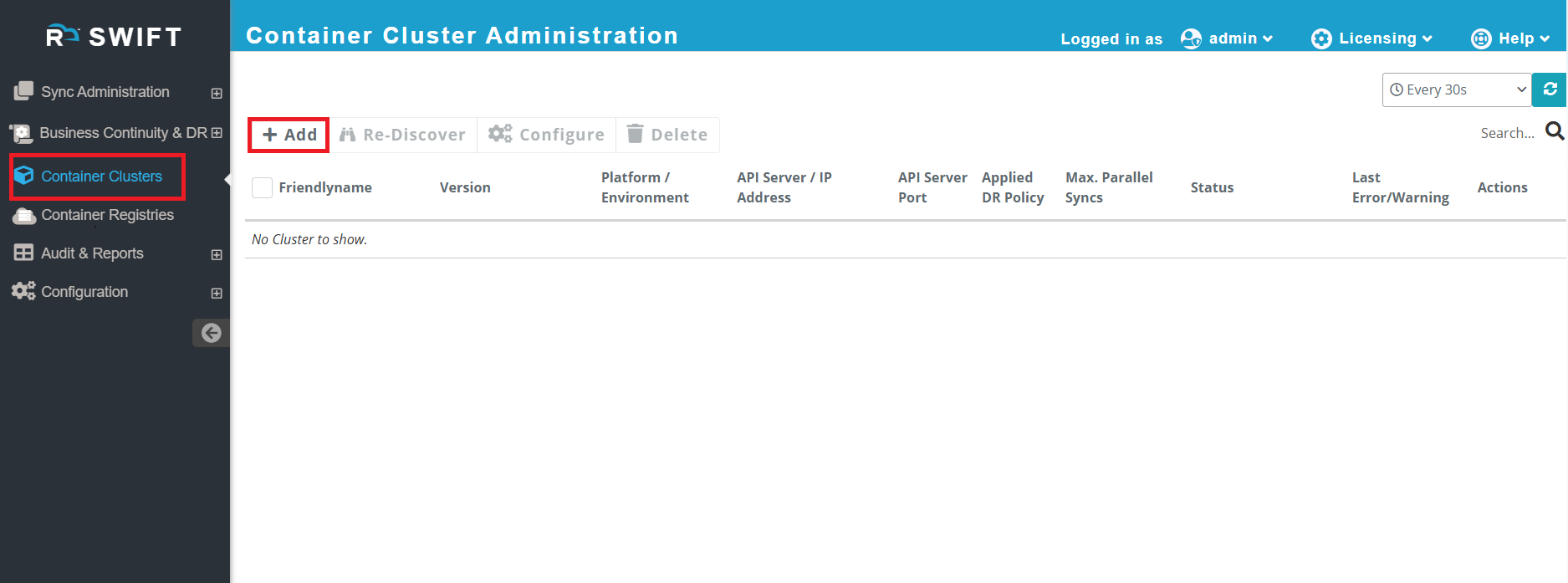
1. Log in to the SWIFT dashboard, go to Container Cluster, and click Add.
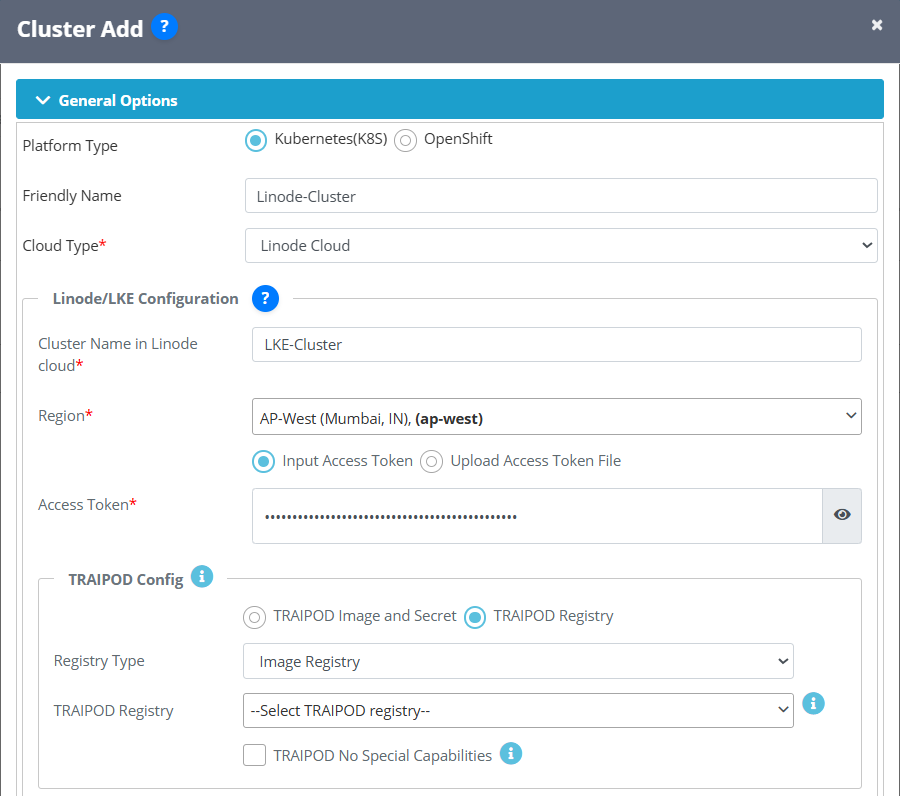
2. Once you click the Add button. The Cluster Add dialog box will appear. Enter the required cluster details to proceed with the discovery.
| Field | Field Description |
| Platform type | Select the platform where your cluster is running |
| Friendly name | You need to enter a friendly name according to your cluster or project. |
| Cloud Type | Choose the ‘cloud type’ from the dropdown as SWIFT supports various clouds |
| Cluster Name in Linode Cloud | Put the LKE cluster name that you want to add. |
| Region | Choose the region from the provided list that matches the region of your LKE cluster. |
| Access token | Enter your Linode Personal Access Token with Kubernetes access to enable cluster discovery. |
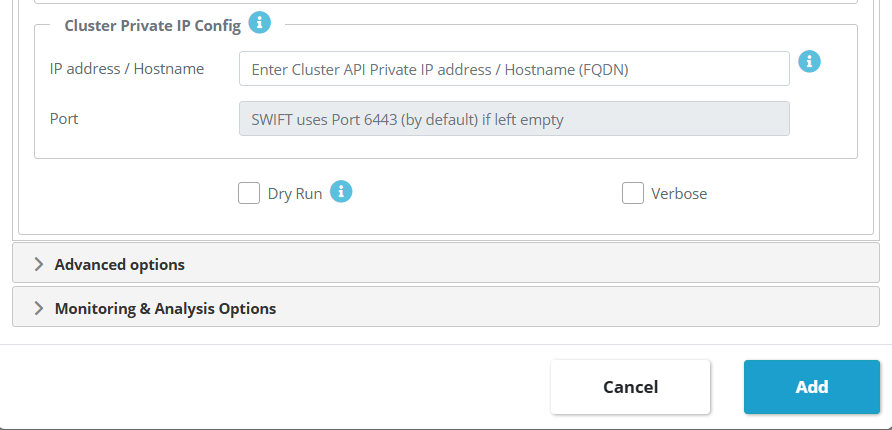
Similarly, there are optional parameters also available in SWIFT.
| Field | Field Description |
| TRAIPOD Config | This is an optional input. They can be configured for each sync, and the values input for the sync will override the defaults set for the cluster. For more info you can look TRAIPOD KB article. To more know about Traipod Config section, Please follow below KB Article. traipod-config |
| Cluster private IP config | This option is needed in LKE because many clusters are private and the default Kubernetes API endpoint is not publicly reachable. If SWIFT is running outside the cluster network (another cloud, VPC, or on-prem), firewalls or private networking can block access. This option lets you provide a reachable private IP, VPN endpoint, or proxy so SWIFT can connect to the cluster API. |
3. Click the Add button. Within a few seconds, the LKE cluster will be added successfully.
4. Once the cluster is discovered, you can view all information about the cluster and its metadata. Simply expand the cluster by clicking on it, and you will see the details.
5. When you go to the Summary tab, you will find information about the cluster, such as its creation date, Linode cluster name, API server port, Kubernetes version, and more. It will display the basic details of cluster.
6. When you go to the Kubernetes Objects tab, you can view the objects running in your namespace. Simply select the object type from the Object Type tab and choose the namespace from the dropdown. This will display the objects running in that namespace on the cluster.
What next:
Now that the clusters are discovered, you may want to set up a Migration or Disaster Recovery (DR) job. Then follow below KB links.
How to migrate application with Passthrough sync
How to migrate applications with Stage sync
PT and stage sync with DRP apply
Related KB's
Re-Discover : This option allows you to re-discover the cluster. If you have added new namespaces or applications to the cloud cluster and want them to be reflected in the SWIFT portal, you can re-discover the cluster.
Configure : Use this option if you want to modify the cluster configuration. Please check KB Article on 'Configure the cluster'
Delete : Use this option to delete the cluster. However, ensure that no DR Policy is attached to the cluster; otherwise, the cluster cannot be deleted and the Delete option will be disabled. It will delete from SWIFT dashboard only not from cloud.