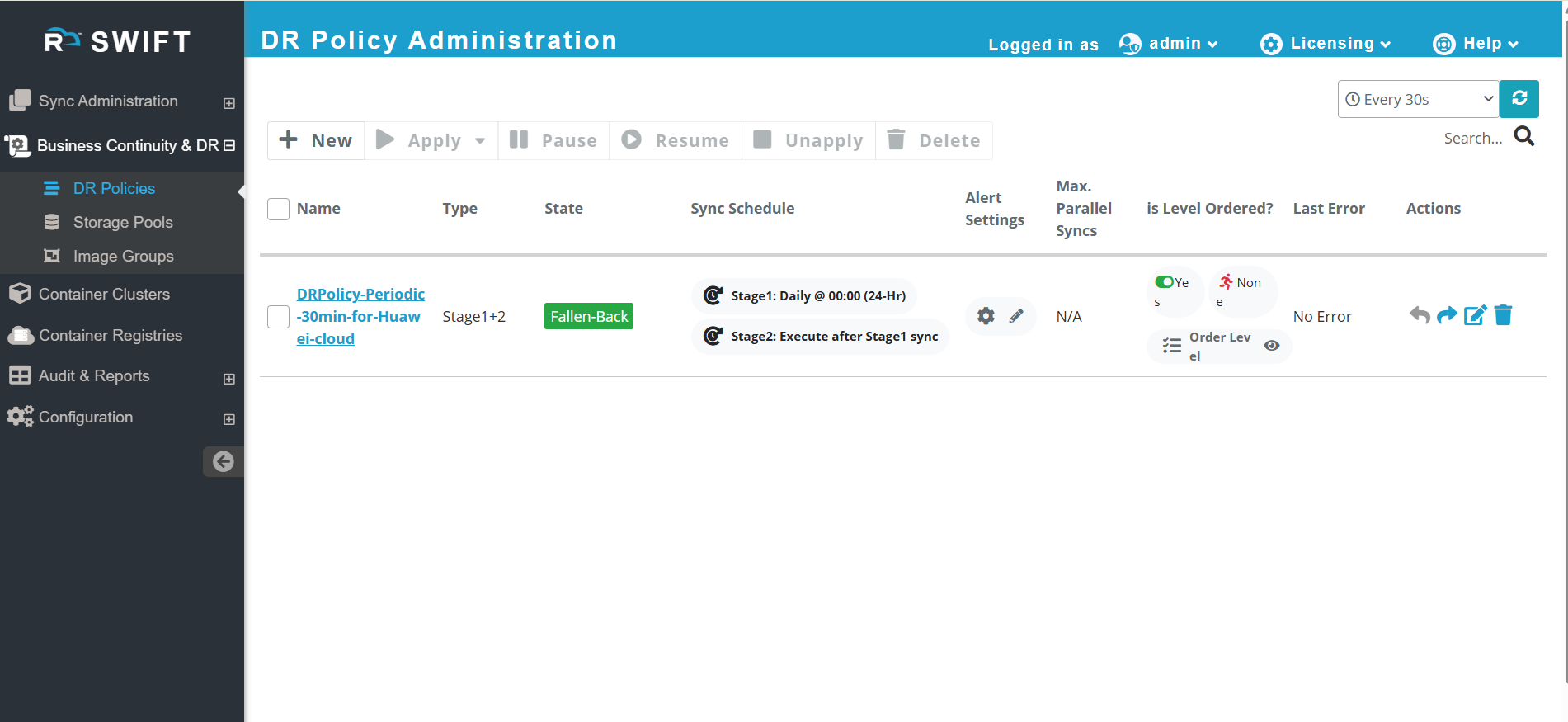
In this article, we will see how to set up a Stage 1+2 DR Policy from any Kubernetes cluster to Huawei CCE. When the Stage1+2 DR Policy is applied in SWIFT, Stage-1 performs data backup by syncing applications to SWIFT storage, and Stage-2 replicates this data to the DR cluster.
Pre-requisite:
2. Source and target cluster should be added in SWIFT
3. At least one storage pool created
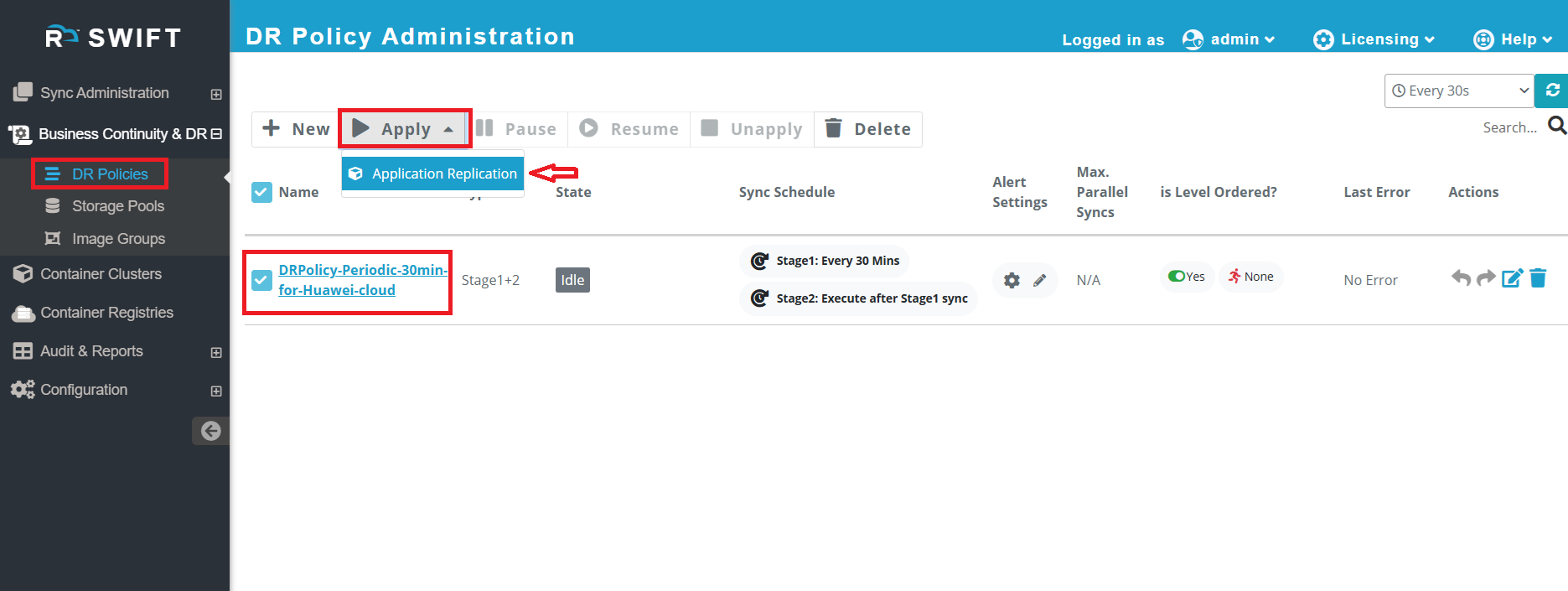
1. To apply the Stage-1+2 DR Policy, navigate to Business Continuity & DR > DR Policies, select the created Stage-1+2 DR Policy, click Apply, and then choose Application Replication to enable the policy.
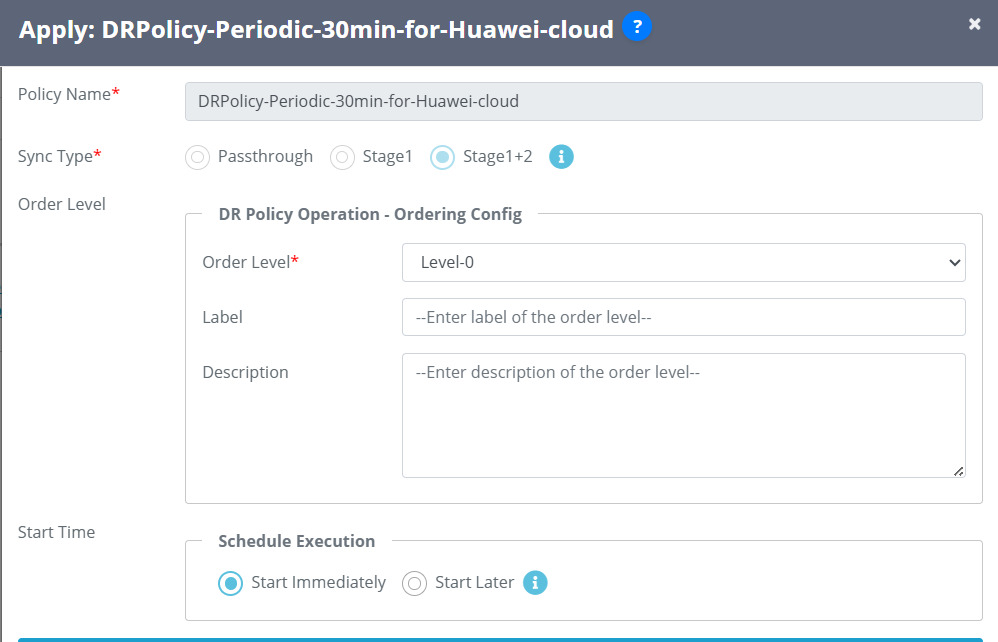
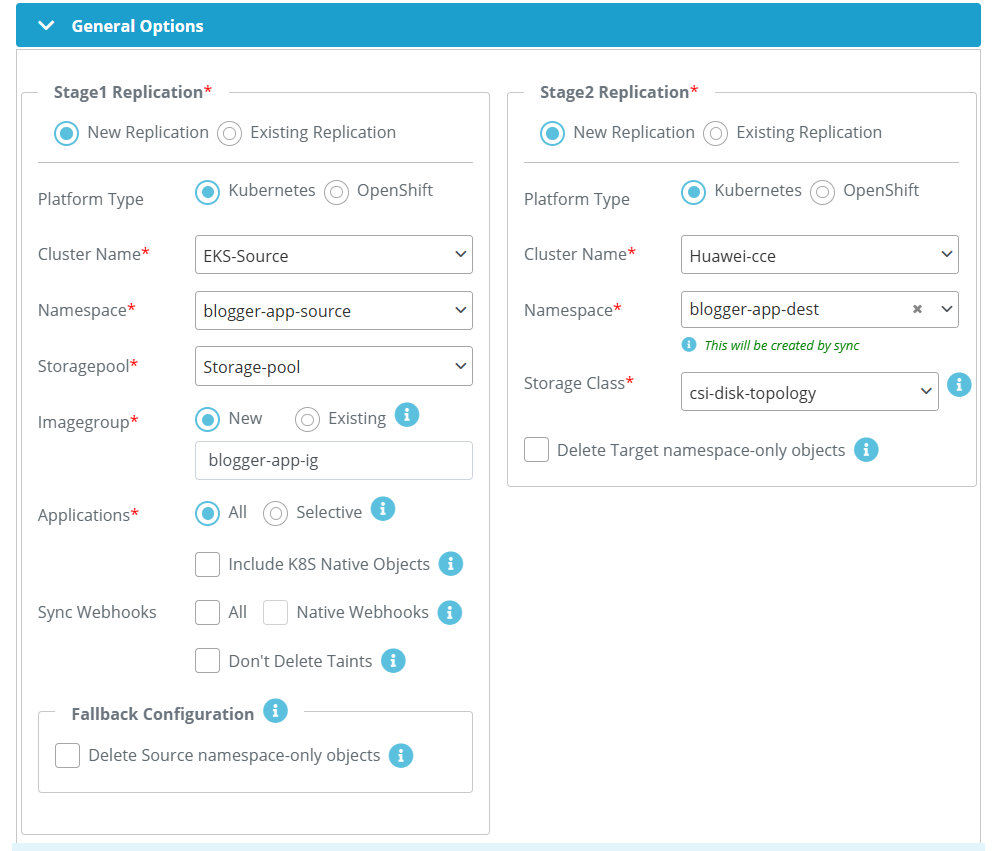
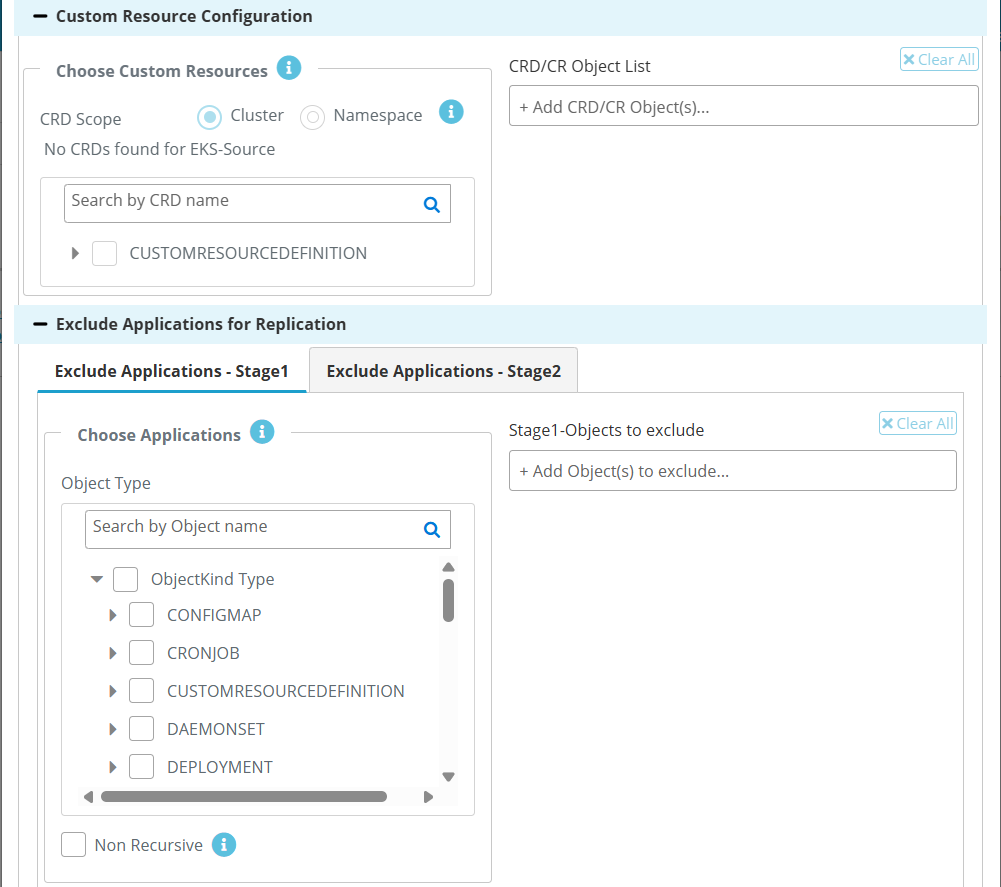
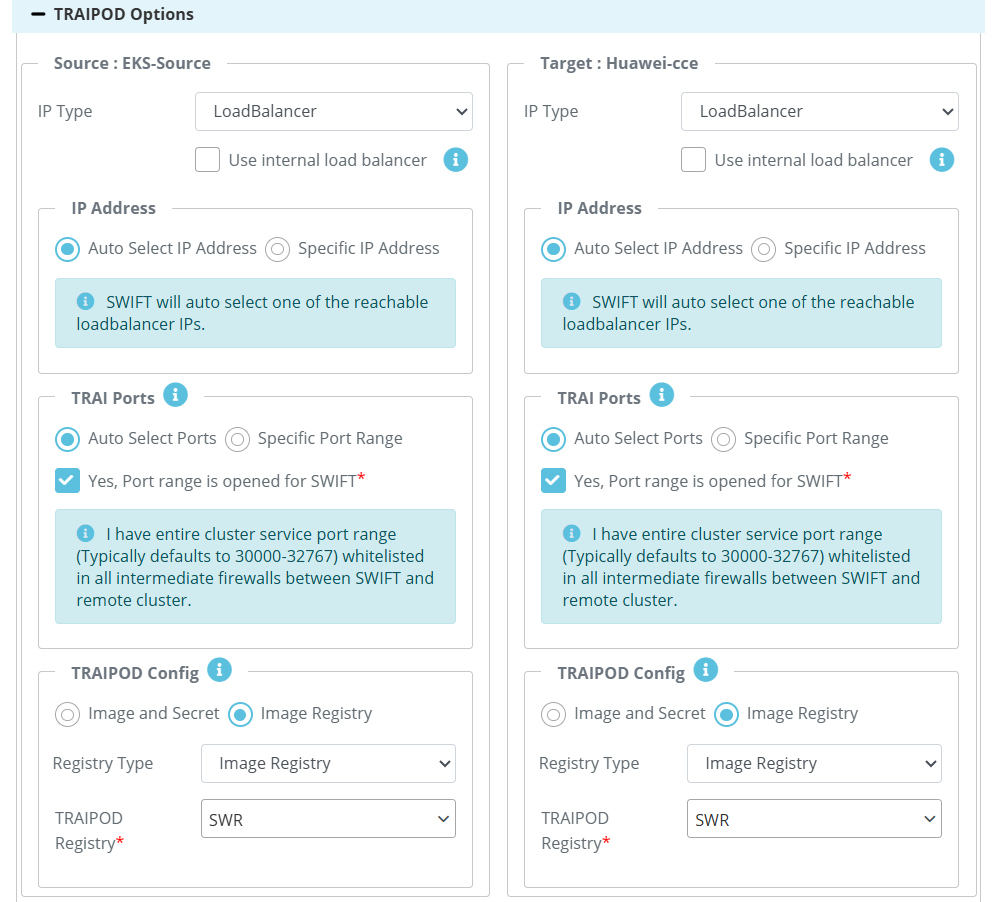
2. After clicking Application Replication, a new window will appear, as shown in the example below. Please refer to table below the screenshot for details information about the details to be filled. Here we will set DR from EKS to Huawei CCE cluster.
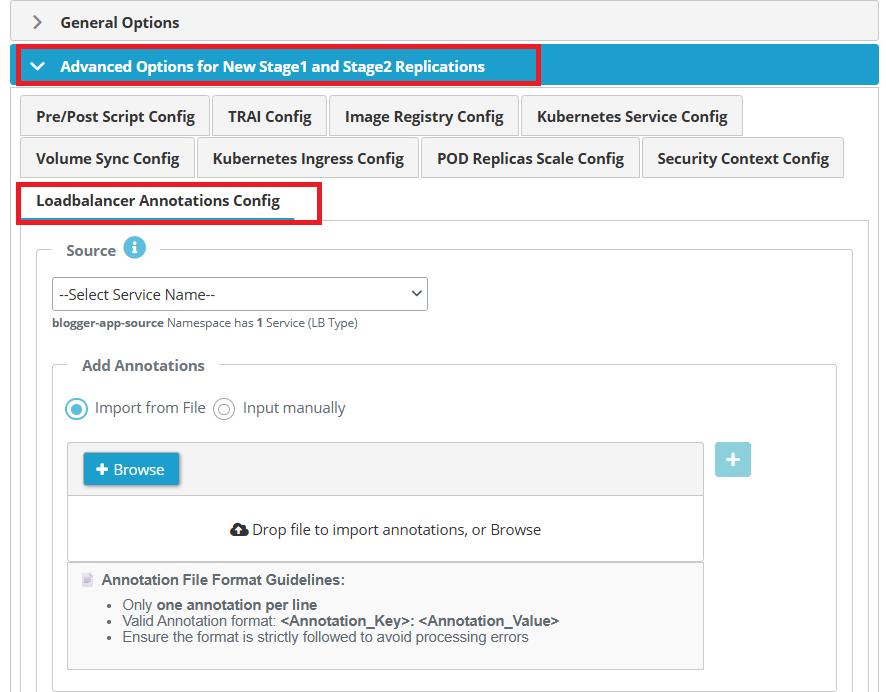
#Now go to the advanced options and add Loadbalancer annoations To provision a Load Balancer. You must add the required service annotations along with EIP details. This can be configured using SWIFT.
To do this, Navigate to Advanced Options > Select the LoadBalancer Annotation Config tab > Select the required service name from the dropdown list > Add annotations by either Uploading an annotation file, or Manually entering the annotation key and value at target, then clicking the Plus (+) button > Click Add to start the DR.
Example Annotation:
kubernetes.io/elb.autocreate: '{"type":"public","bandwidth_name":"cce-bandwidth-1551163379627","bandwidth_chargemode":"bandwidth","bandwidth_size":5,"bandwidth_sharetype":"PER","eip_type":"5_bgp","name":"james"}'Important Note:
Repeat this process for each LoadBalancer-type service that requires Load Balancer provisioning.
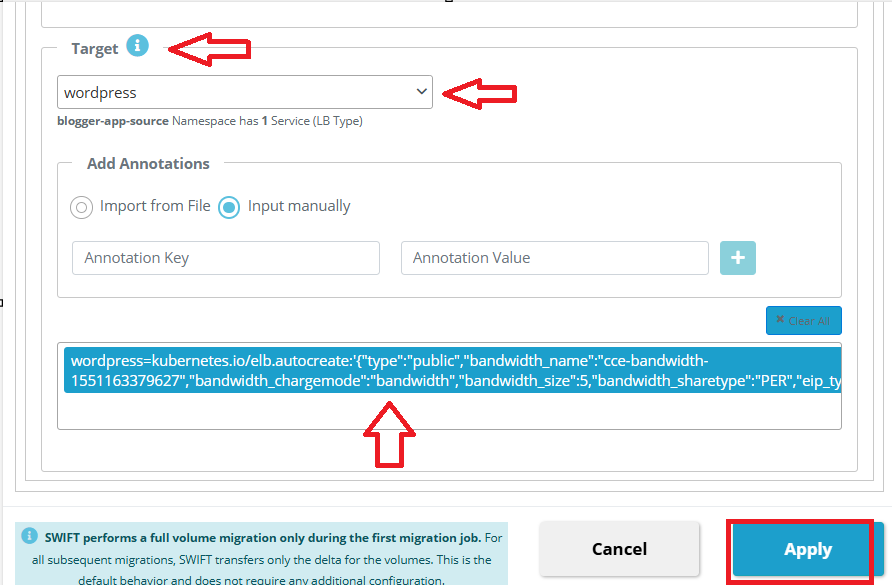
Once you filled all the details click on Apply to start the DR Policy.
| Fields | Fields Description |
| Policy Name | The Policy name will be displayed for whichever policy you are applying |
| Sync Type | Since you created a Stage1+2 sync mode, it will display the same. |
| Start Time | Here, if you want to sync immediately then you can click on start immediately otherwise you can start the specified time, you just need to 'click on start later' and specify the time on which sync should start. |
| Platform type | Select the platform where your cluster is running for source and target. |
| Cluster Name | Select the clusters name from dropdown for both source and target side. |
| Namespace | Provide the namespace at source side where you source application running. Also choose namespace at target side. |
| Storagepool (Source side) | This is pre-requisite , it should be created before applying DR policy. |
| Image Groups | Provide the image group name it will be created during sync. An Image Group in SWIFT is a collection of volume images captured from an application during the backup or sync process . |
| StorageClass (Target Side) | Select the storageclass to be used at target cluster. |
| Application | ALL -> Everything in your IG, all objects will be replicated. Selective --> If you want to do only selected object then you can use this option. Include K8S native objects --> Include native k8s objects' ensures that Kubernetes objects like Services, ConfigMaps, Secrets, and Ingress are migrated along with the application. |
| Sync webhook (Source side) | ALL --> If you select this, then all webhook that are present in the source, it will migrated to target. Native Webhook --> Includes cluster-level native Kubernetes webhooks during migration. Don't delete the taints --> By default taints going to be deleted, if you don't want this, then you can select this option |
| Exclude applications for replication | If you want to exclude certain application or objects from source side, then you can do from this option |
| Traipod Options | In the TRAIPDO section, you can choose either Auto-select Port or specify a Custom Port Range (if you have whitelisted ports between 30000–32767). The selected port will be opened in the cloud firewall accordingly. In the TRAIPDO Config section, you will see two options: 1. If you select 'Image and Secret', you will need to provide the image and its corresponding image secret at both sides. 2. If you select 'Image Registry', you can choose an image registry that has already been added to the container registry at the both sides. |
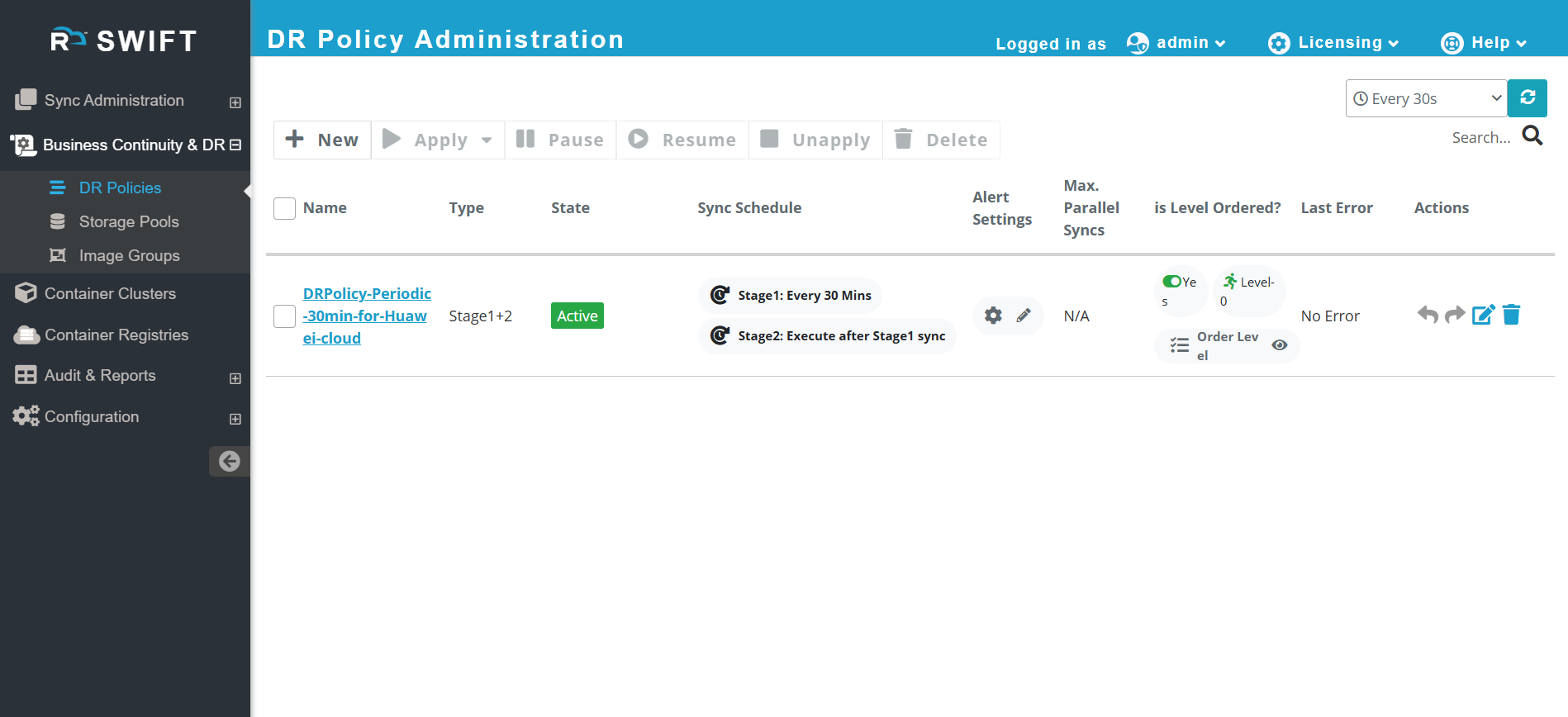
3. Once the Stage-1+2 DR Policy is applied, it becomes active and the sync process begins. The sync runs every 30 minutes as per the configured schedule, and the sync frequency can be modified if required.
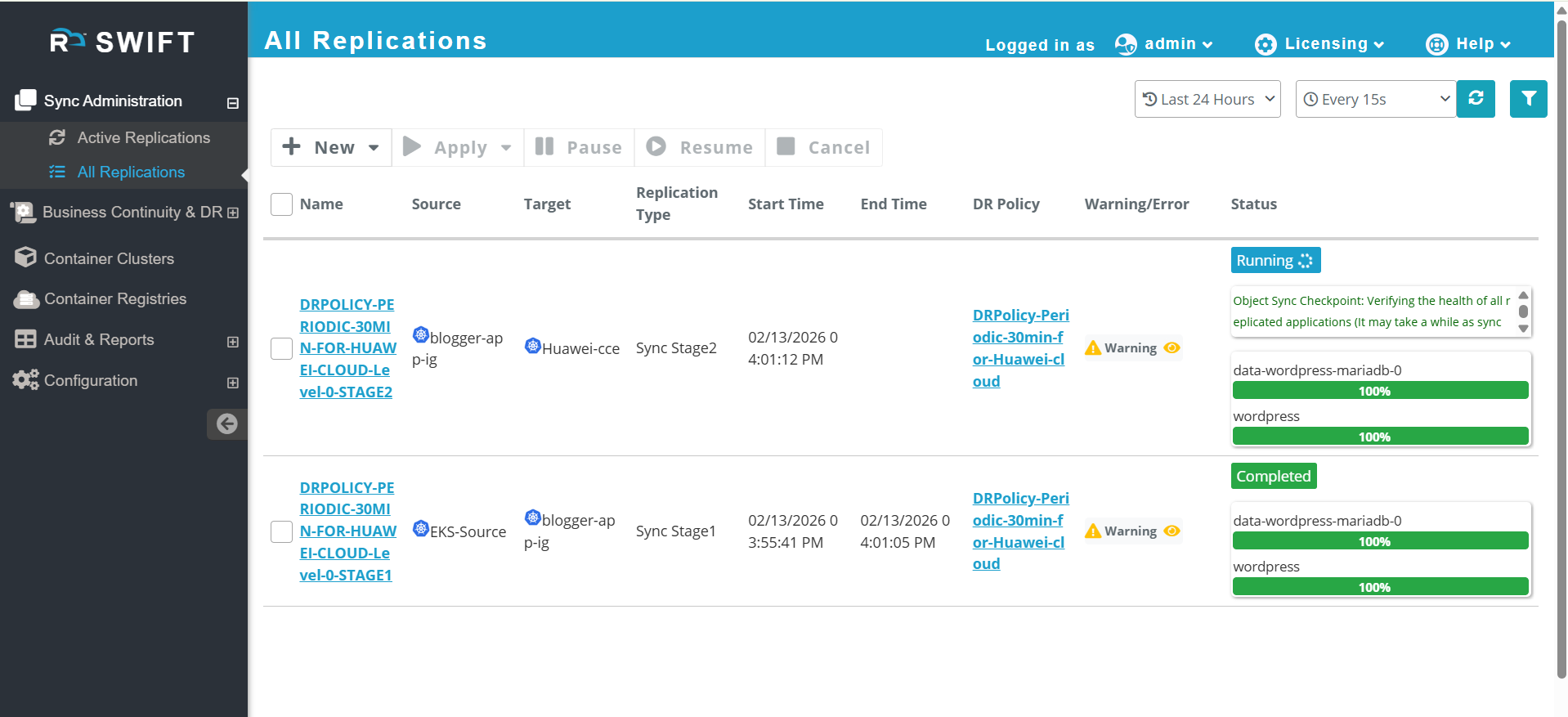
4. Go to Sync Administration → Application Replication. Here, you will see the Stage-1+ 2 sync initiated by the applied DR Policy, along with the corresponding DR Policy name.
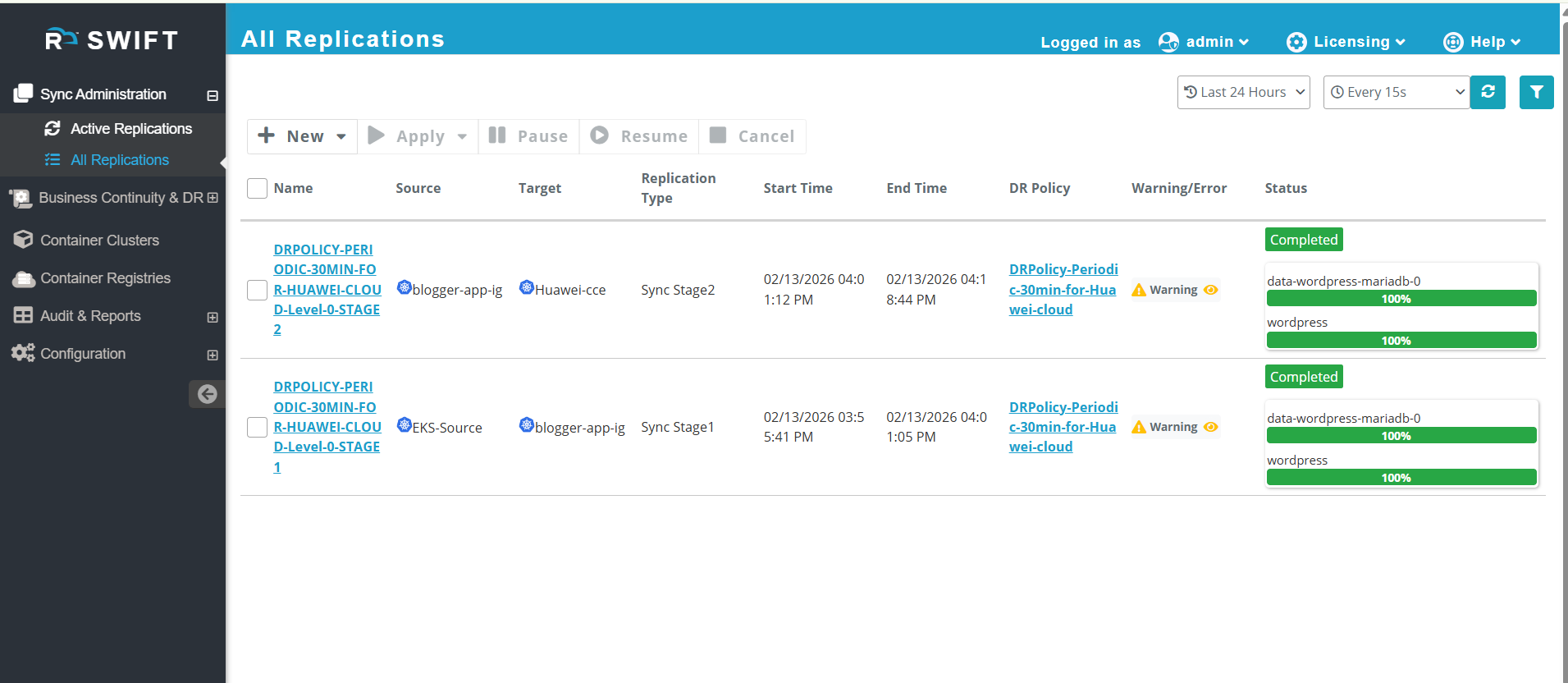
5. Wait until the Stage-1 and Stage-2sync gets completed. As shown below, both sync stages are Completed.
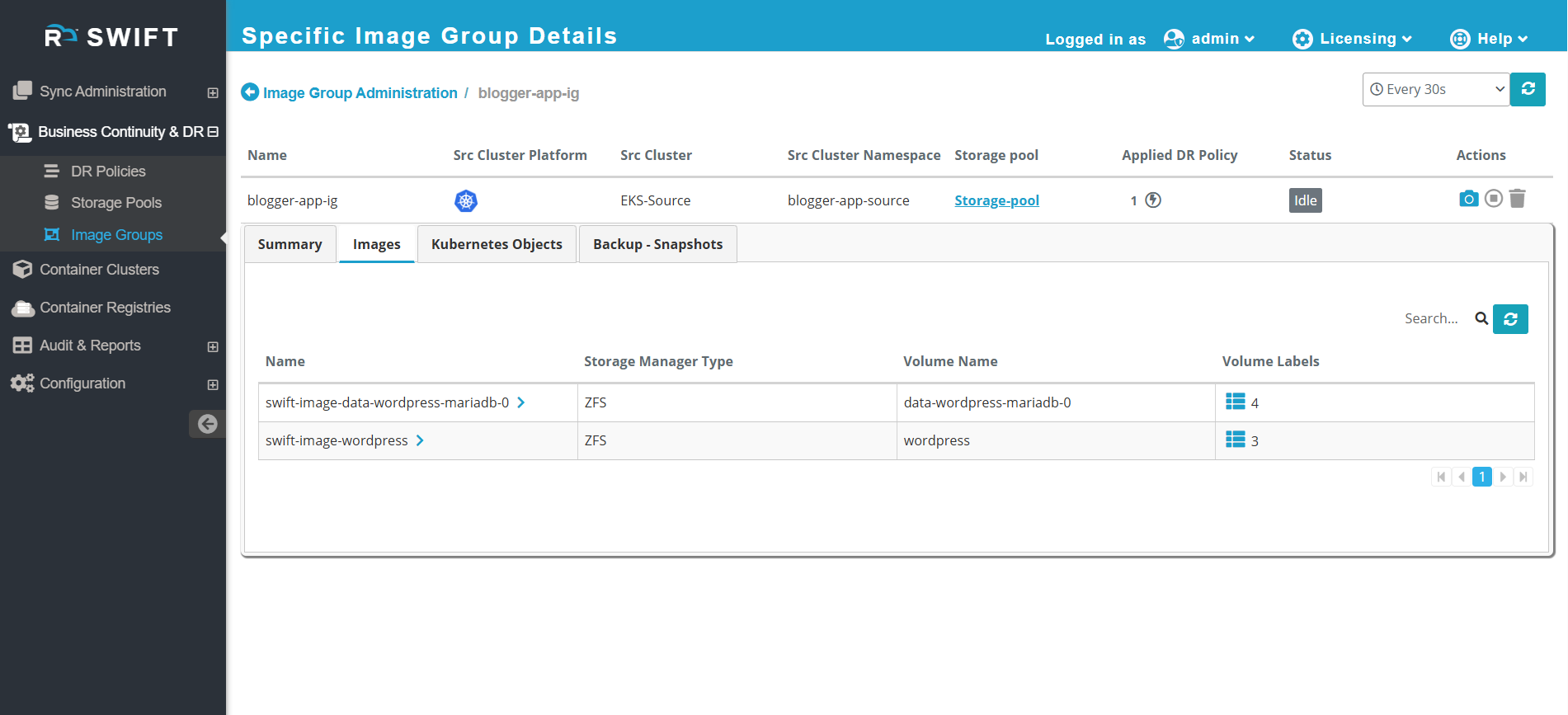
6. You can see that the application has been successfully backed up on the SWIFT side under the Image Group.
7. You can check the target (DR) cluster’s namespace to confirm that the same application has been successfully replicated.
You can make changes to the application on the source cluster. After the configured schedule interval (here, 30 minutes), the sync will be triggered automatically, and all the changes will be replicated to the DR side.
If you want failover and fallback then please check below steps.
Failover :
Failover is performed when the source cluster goes down and you want to restore all your setup on another cluster. SWIFT transfers all applications, PersistentVolumeClaims (PVCs), and associated data from the source cluster to the target (DR) cluster, ensuring business continuity with minimal downtime.
If the EKS cluster encounters an issue or goes down and you want to restore all data to the cluster, you can perform a failover using SWIFT.
1. Go to the DR Policy Adminstrstaion > Select the DR Policy > Click on right tilted arrow .
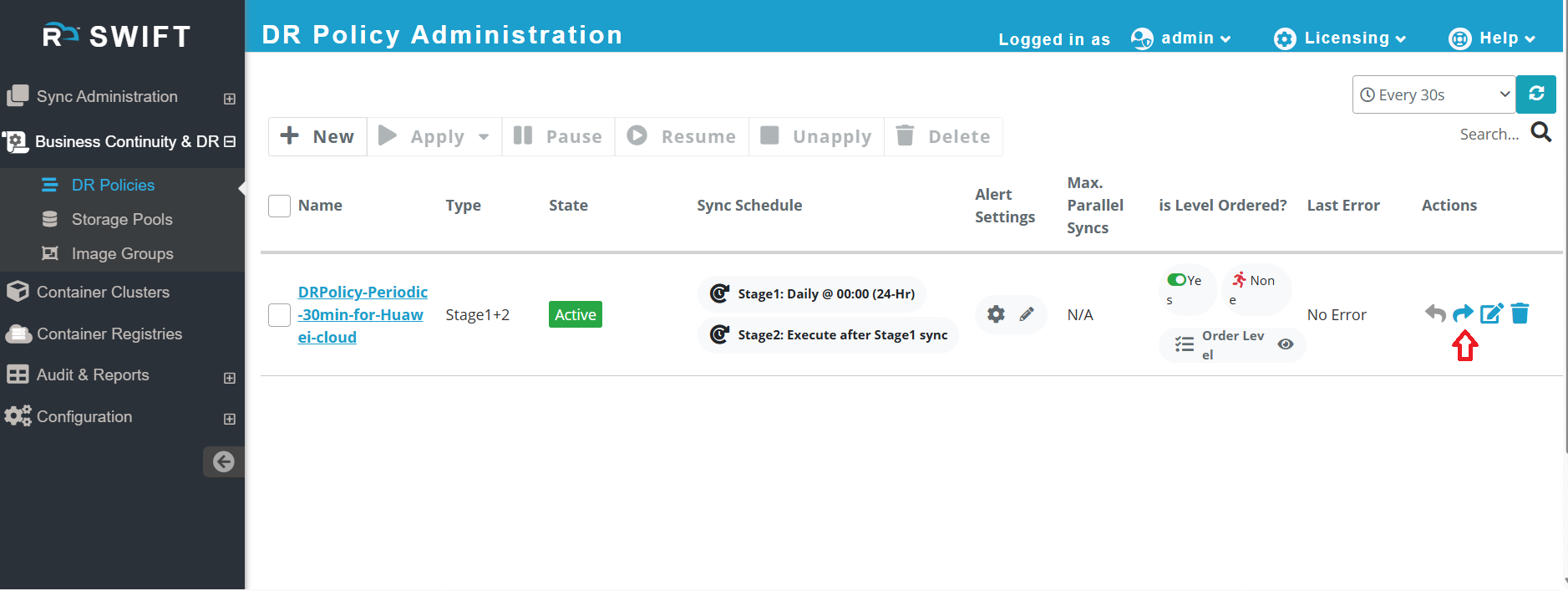
2. Once you clicked on Failover button, then below screen will be prompted.
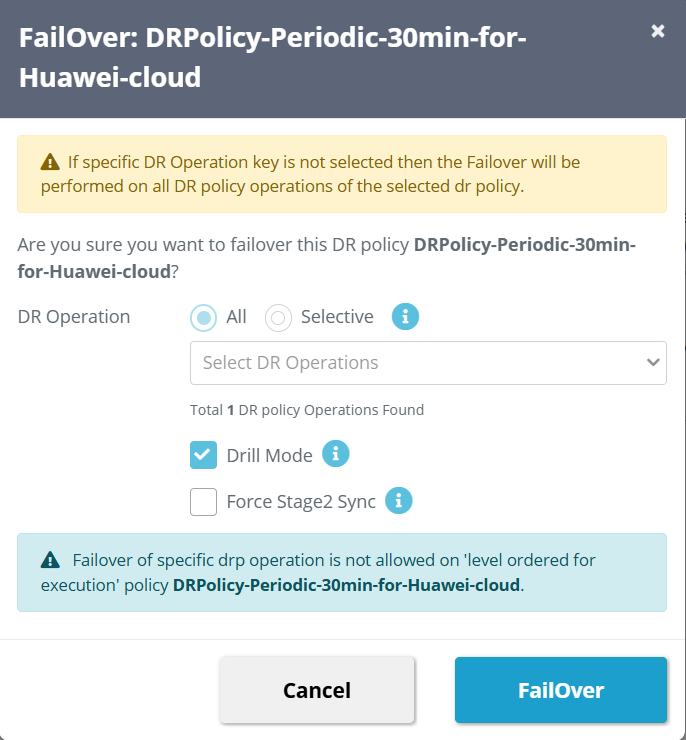
#Drill Mode :
When you click on Failover, by default Drill Mode will be selected and it is testing purpose.
#Force Stage2 sync :
Use this option to perform a forceful failover of Stage 2 sync. It should only be used with a Stage1–2 type policy.
If both Stage 1 and Stage 2 sync are already completed and the target has the latest data, but you still need to run Stage 2 sync again, you can select this option.
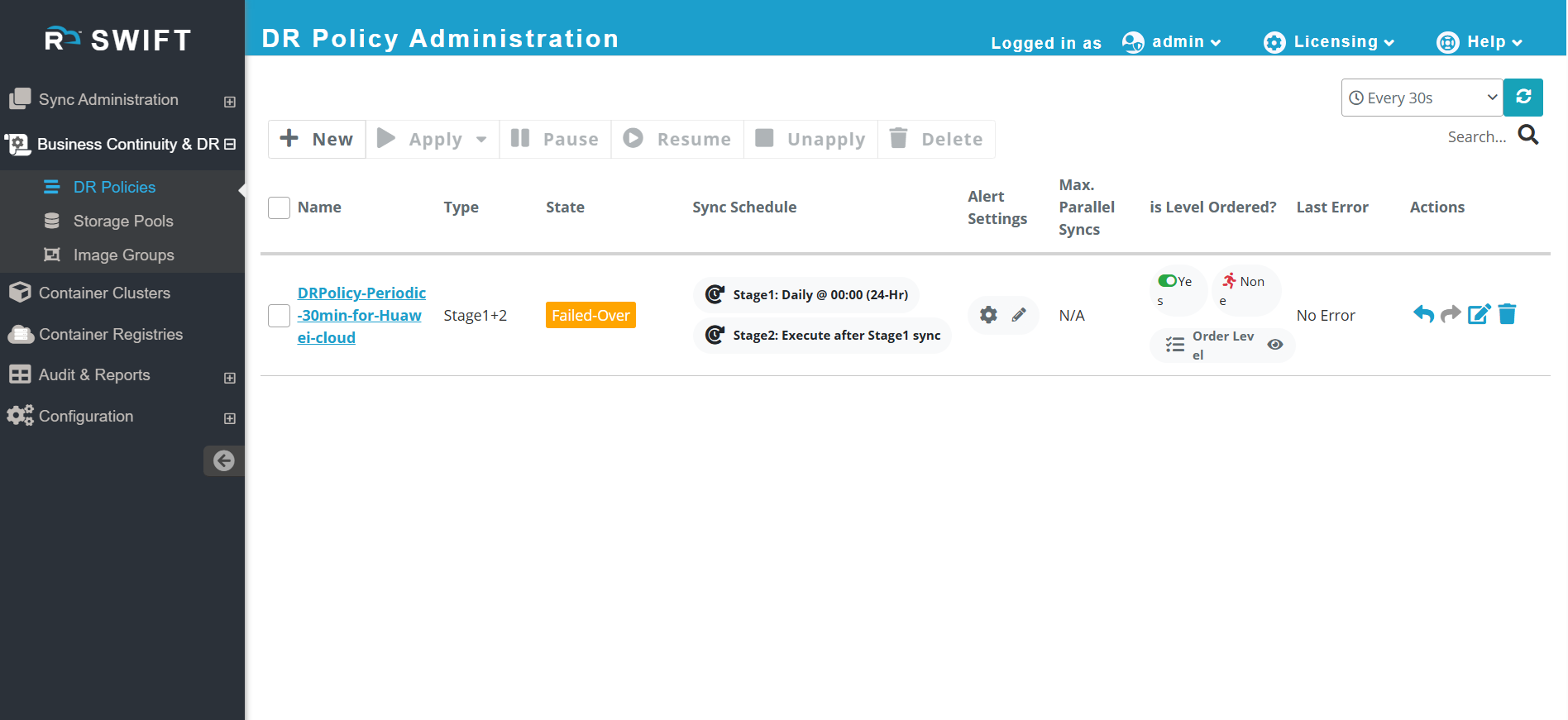
3. When you failover the policy, it will looks like below.
Fallback:
Once the source cluster is back online, you can perform a fallback. This will sync the updated data and applications from the Huawei back to the EKS, restoring your original setup
1. To do this Go to Failed over policy and click on Fallback button.
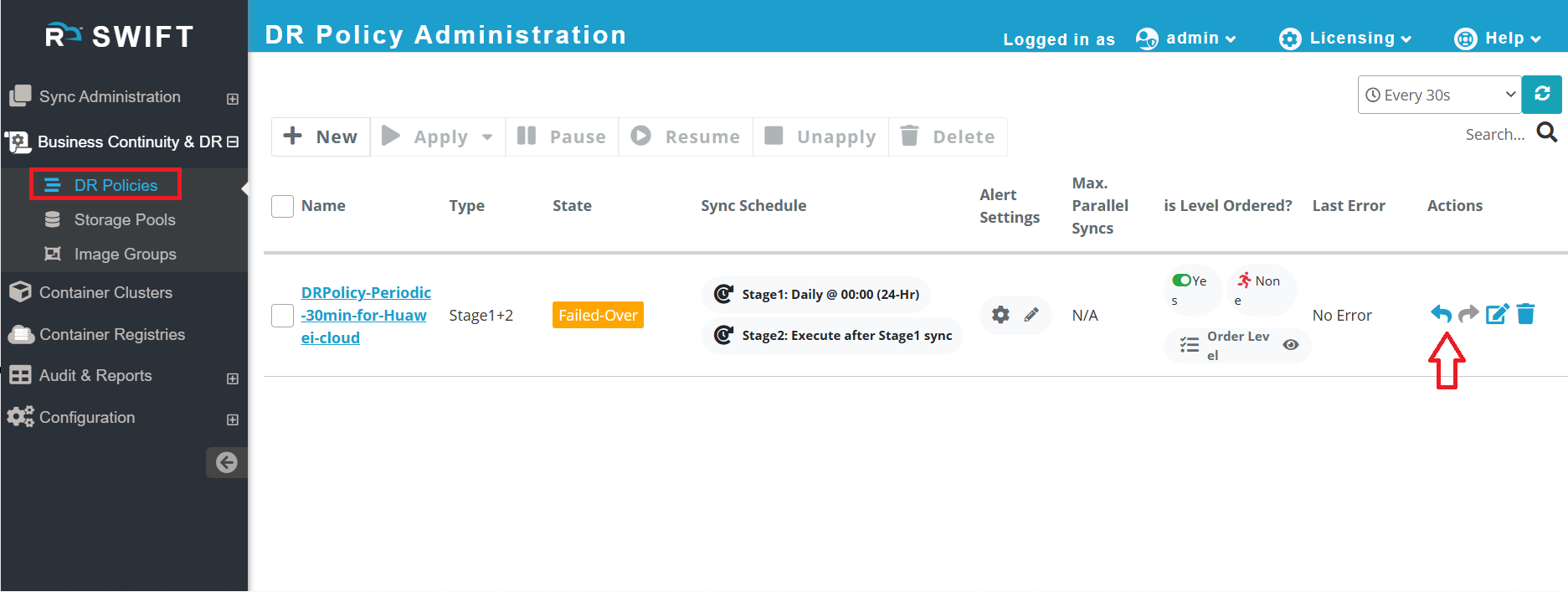
2. When you click on Fallback button, then new prompt will be appered.
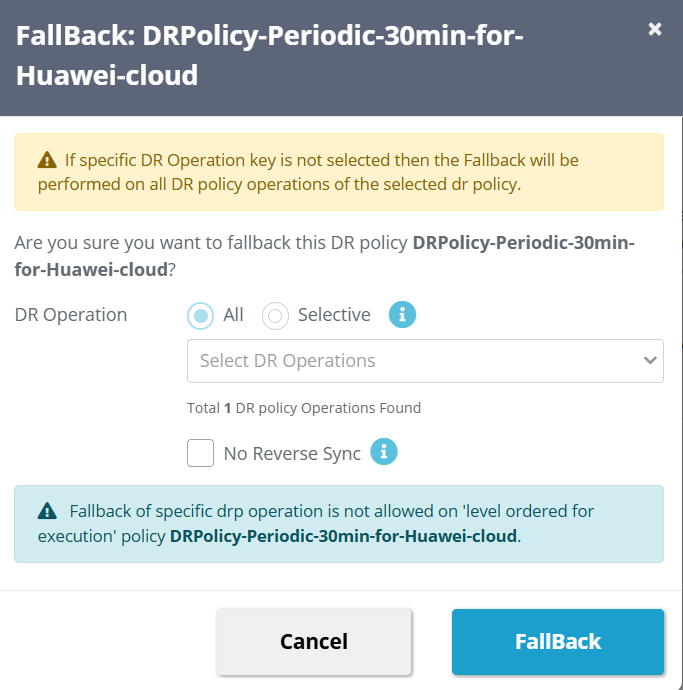
#No Reverse Sync : By default data from target to source will be synced, if you don't want to sync data from target to source, then select this 'No Reverse Sync' option. And click on Fallback.
3. When Fallback is Performed then it will looks like below.