SWIFT allows you to protect Kubernetes applications by creating local and remote backups after completing Stage 1 sync, which creates an image group. You can perform full or incremental backups to maintain multiple recovery points and protect application data. In case of data corruption or failed updates, you can roll back by restoring a required version from available backup images.
Local backup is stored within the SWIFT VM, while remote backup is stored on selected cloud environment. This provides simple data protection, version control, and flexible recovery options.
Pre-requisite:
1. Local storage pool must be there.
2. Stage1 sync should be completed.
Topics Covered
Steps to create Local Backup
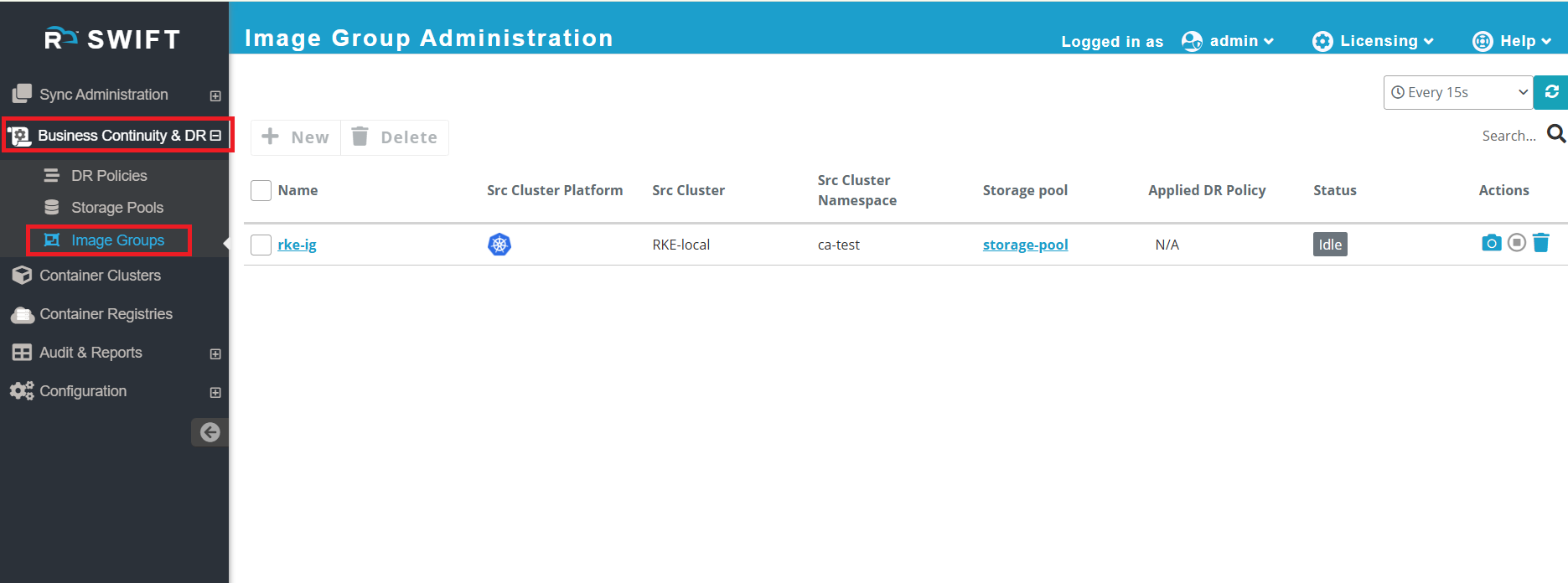
1. After Stage 1 sync, an image group is created, and we can take a backup of that image group. Go to Business Continuity & DR > Image Groups.
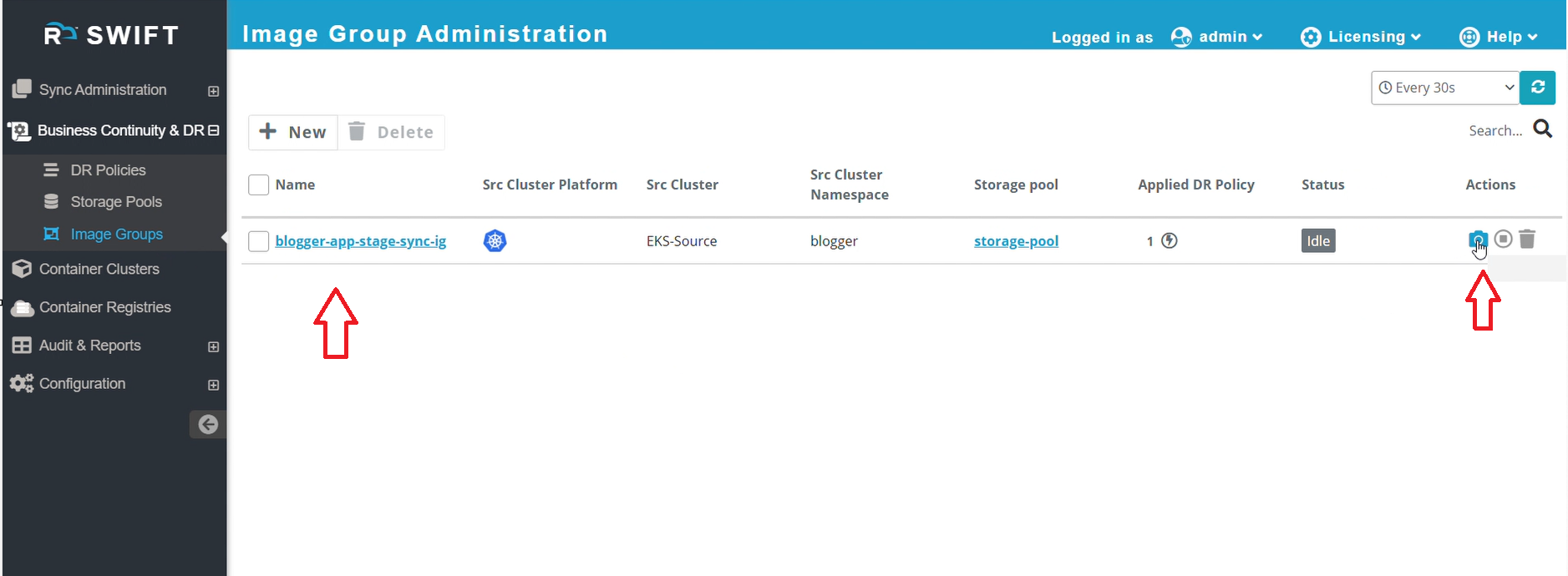
2. Select the image group where you want to backup and click on camera button under actions tab to create a backup.
3. Provide a friendly name, select Local as the Backup Type, and click Create.
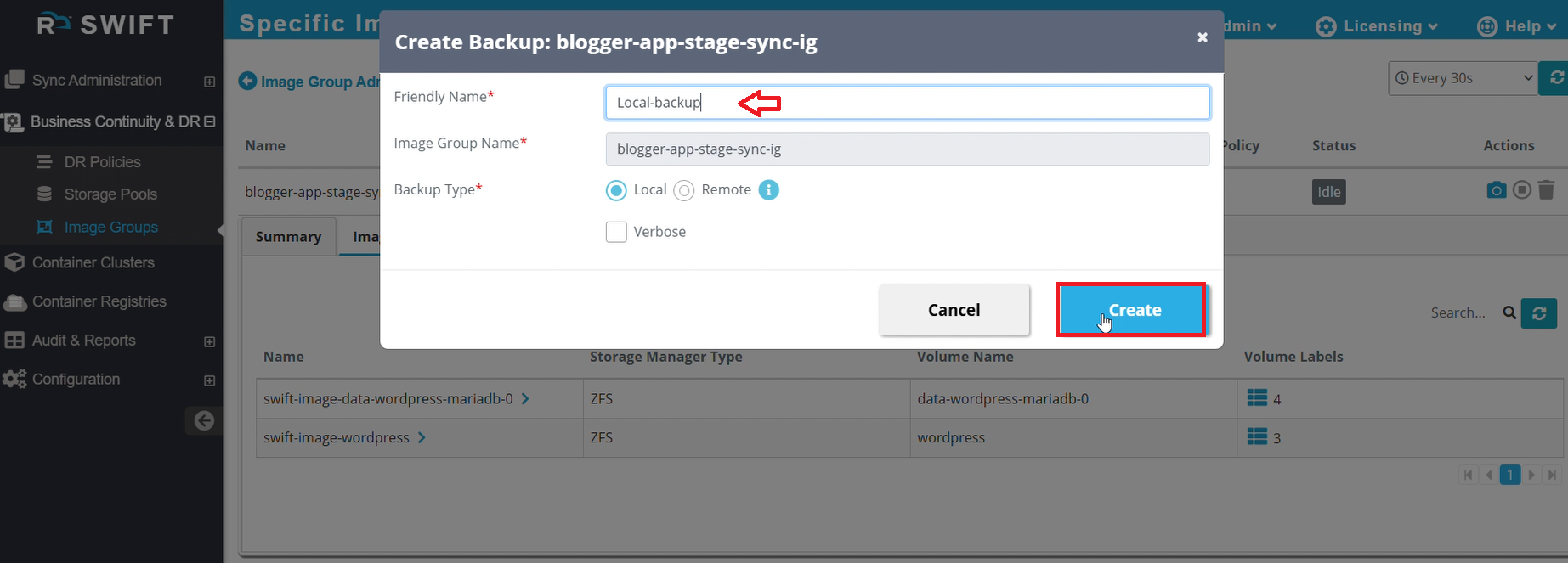
4. Once you click on Create button, it will start the local backup.
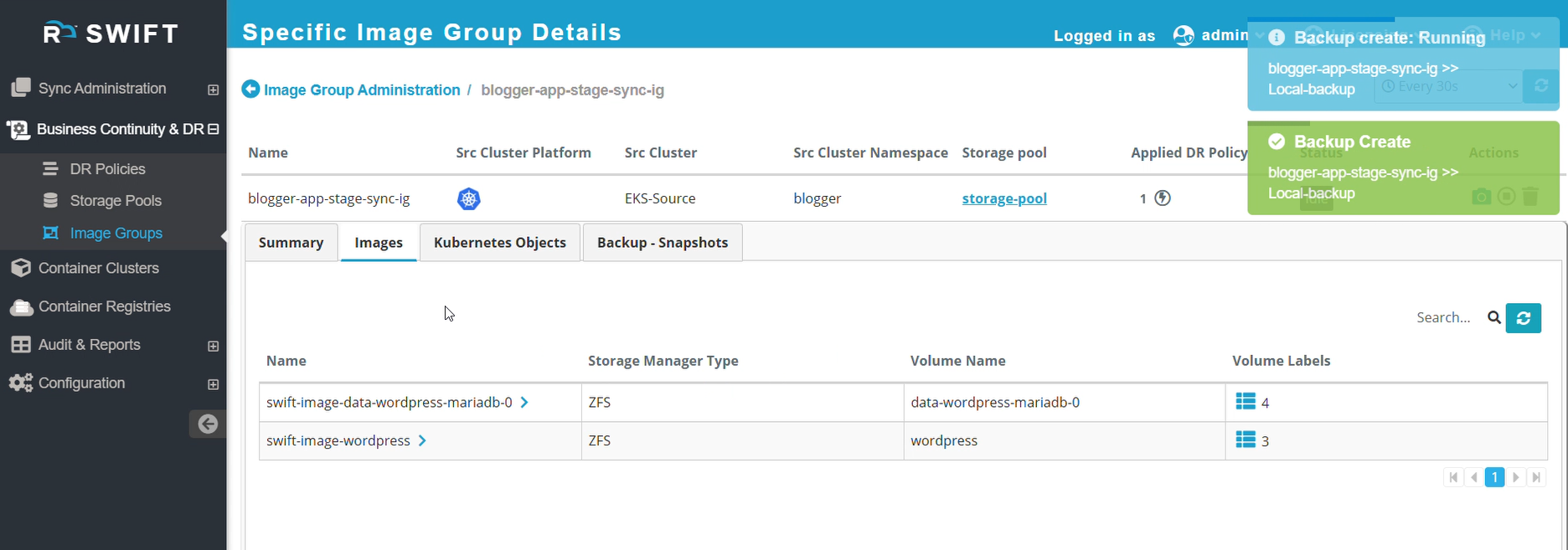
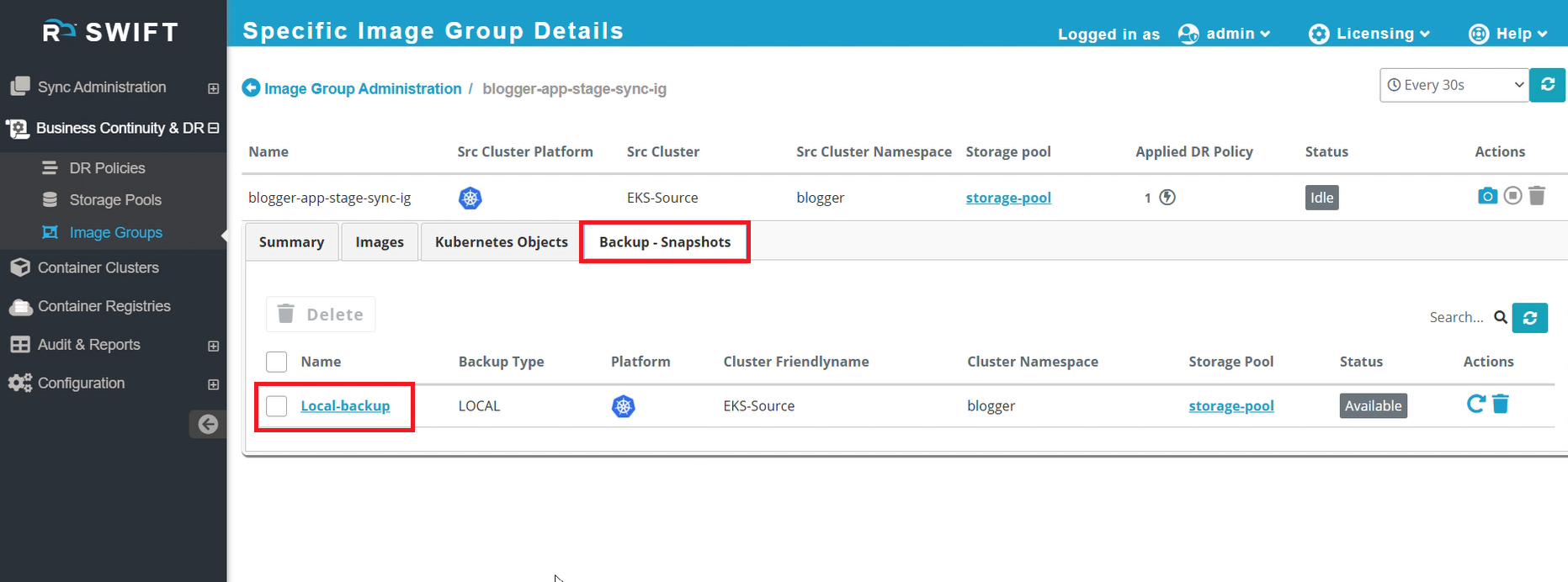
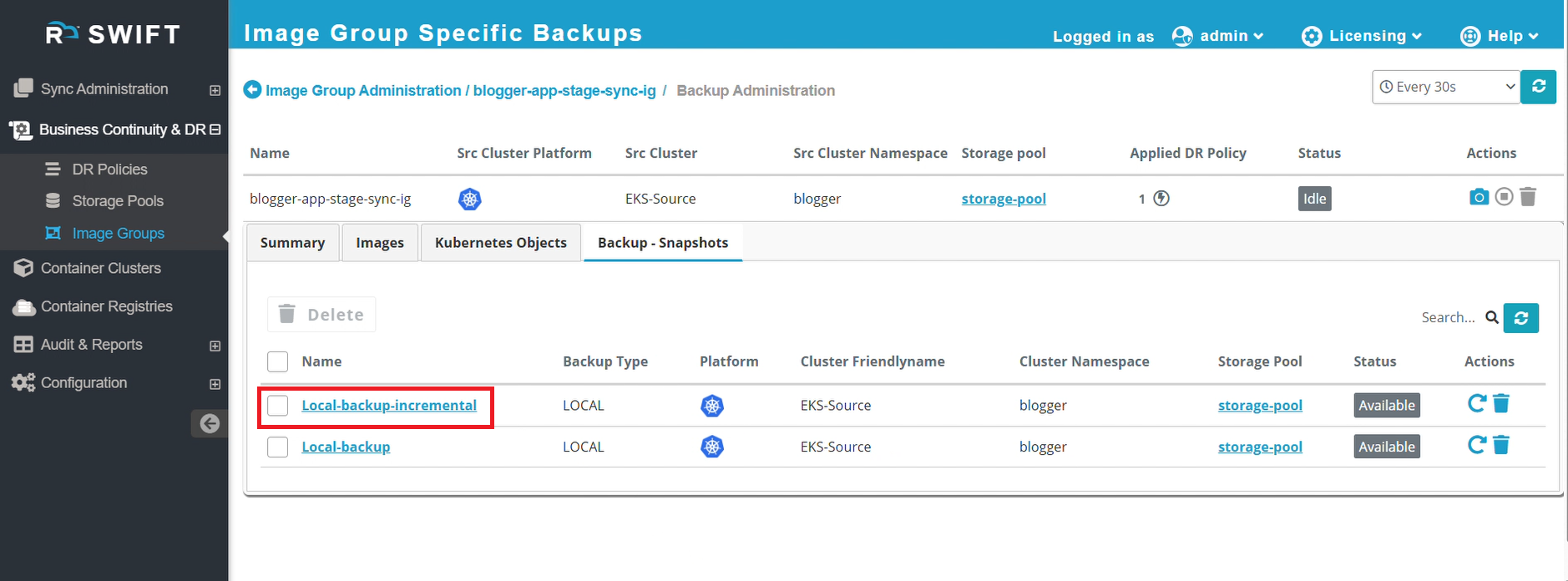
5. To verify, click on the Image Group and open the Backup Snapshot tab. There you can see the created backup.
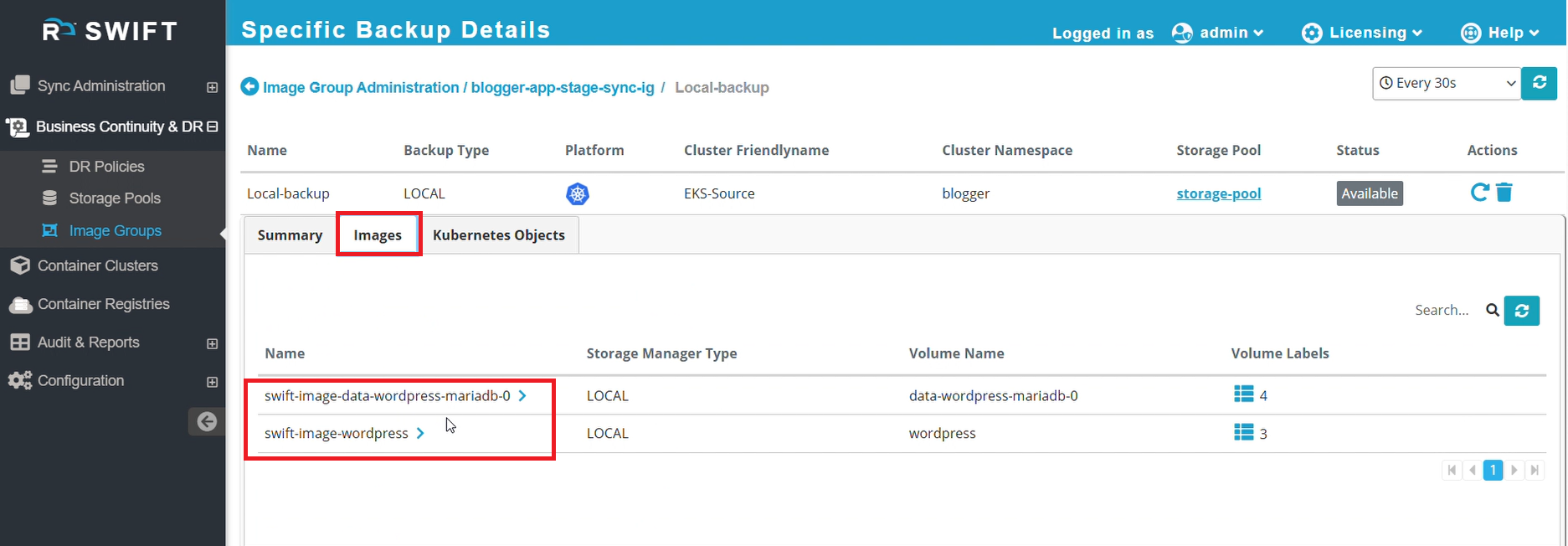
6. To confirm your volumes are backed up correctly, click on the created local backup and verify the details.
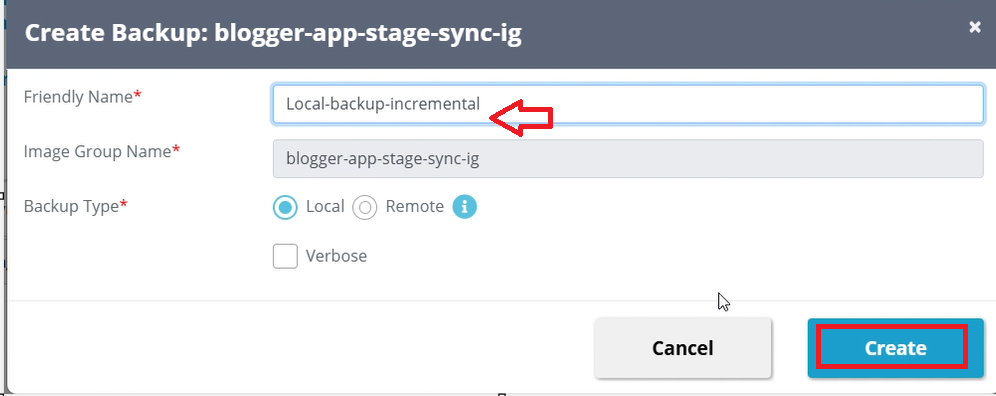
7. Similarly, if we run Stage 1 sync again with the same image group, the image group gets updated. At this point, we can take another backup with the updated data. In this way, we can take incremental backups to maintain different versions of the application.
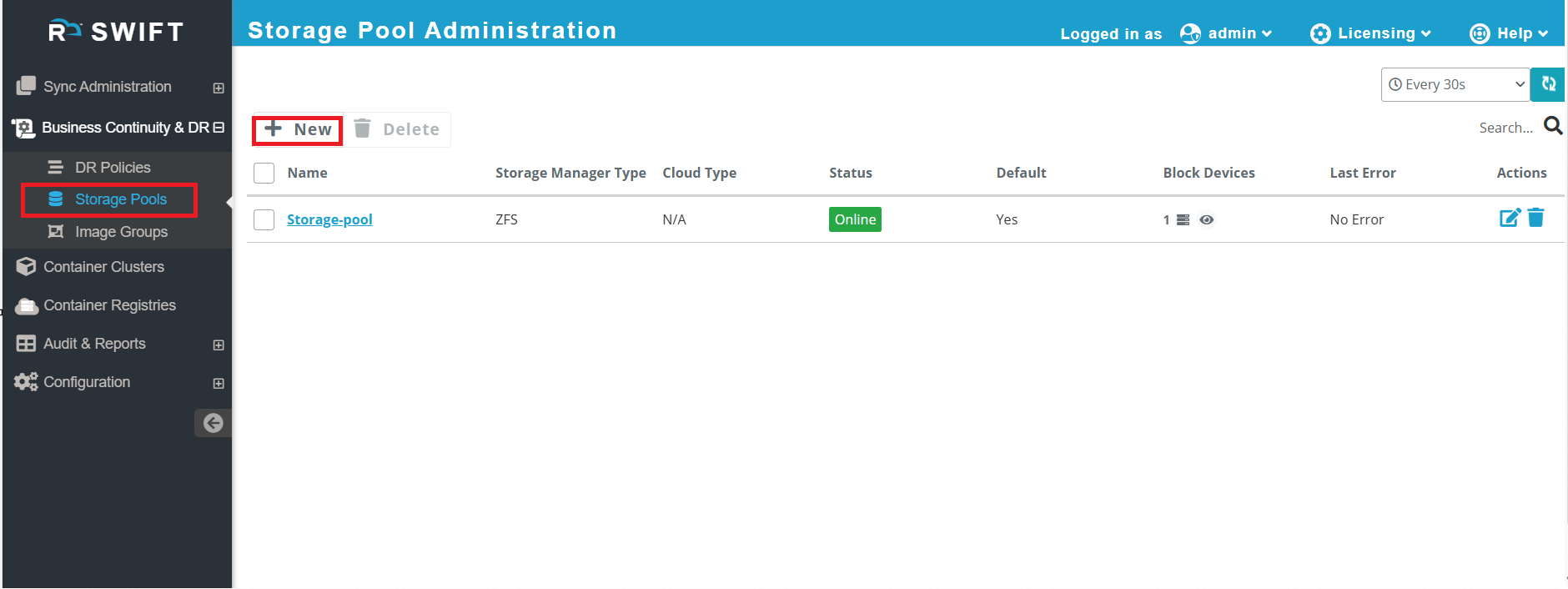
How to create a Huawei remote storage pool.
1. Go to Storage pool under Business Continuity & DR > Click on New.
2. A new prompt will appear. In this prompt, select the highlighted area as shown below.
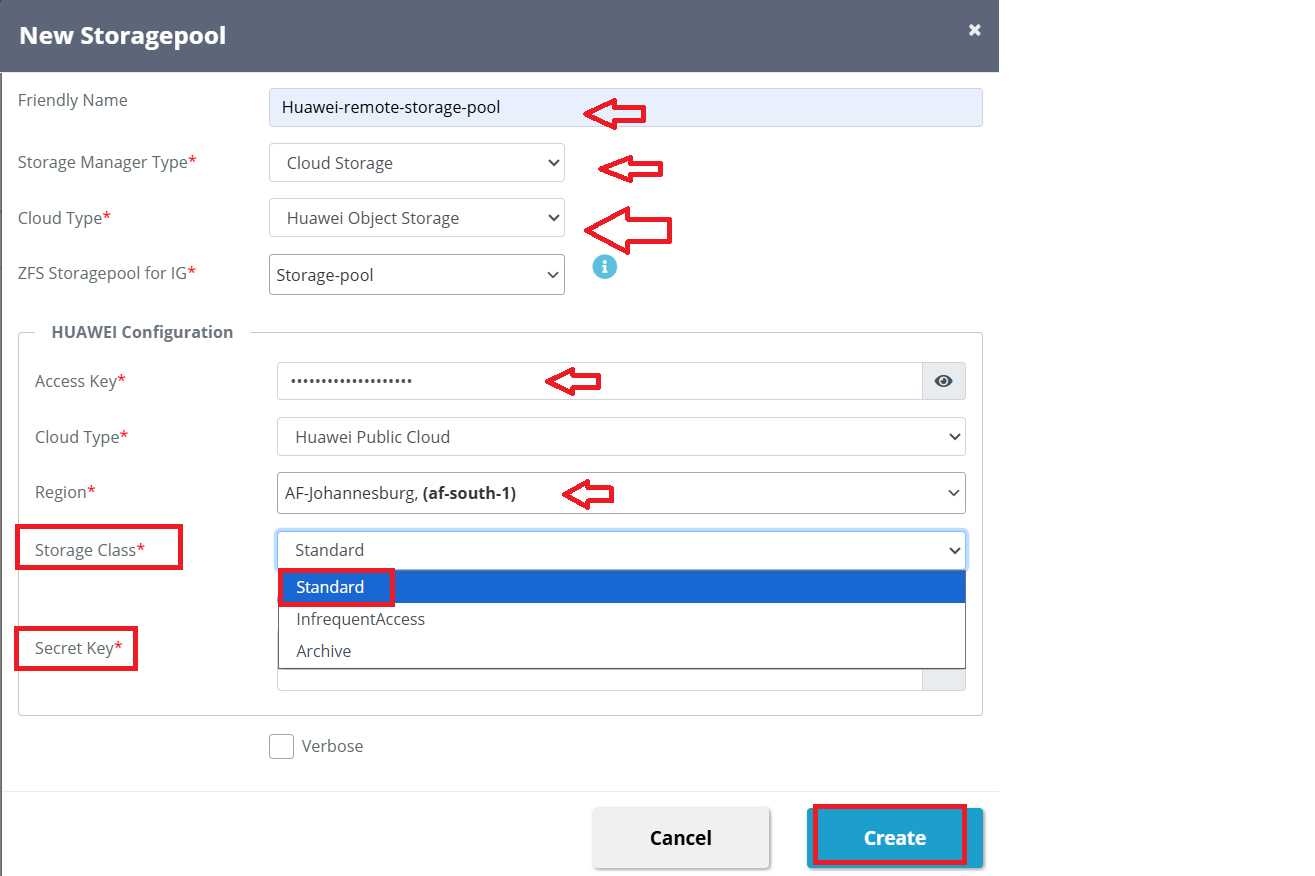
| Field | Fields Description |
| Friendly Name | A user-defined name for the storage pool. Used for identification in the console. It should be unique and meaningful |
| Storage Manager Type | Select Cloud Storage from dropdown since it is a cloud related storage. |
| Cloud Type | Selects the object storage provider. Huawei Object Storage indicates the pool will use Huawei Object Storage Service (OBS) |
| ZFS Storagepool for IG | ZFS storage pool must be created locally. |
| Access Key | Provide access key of Huawei cloud |
| Cloud Type | Specifies the Huawei cloud environment. Huawei Public Cloud means resources are hosted on Huawei’s public cloud rather than private or hybrid. |
| Region | The geographic region where the storage bucket/resources reside |
| Storage Class | There are three type of storageclasses. 1. Standard : You can select when you need high performance and frequent access. 2. Infrequent Access : If you want data is rarely accessed but must be available instantly when needed. 3. Archive : Choose Archive when backup is almost never accessed and retrieval time (minutes–hours) is acceptable. |
| Secret Key | Provide Huawei cloud secret key |
3.Once you click the Create button, it will create a Huawei Remote storage pool on SWIFT using the provided configuration and credentials.
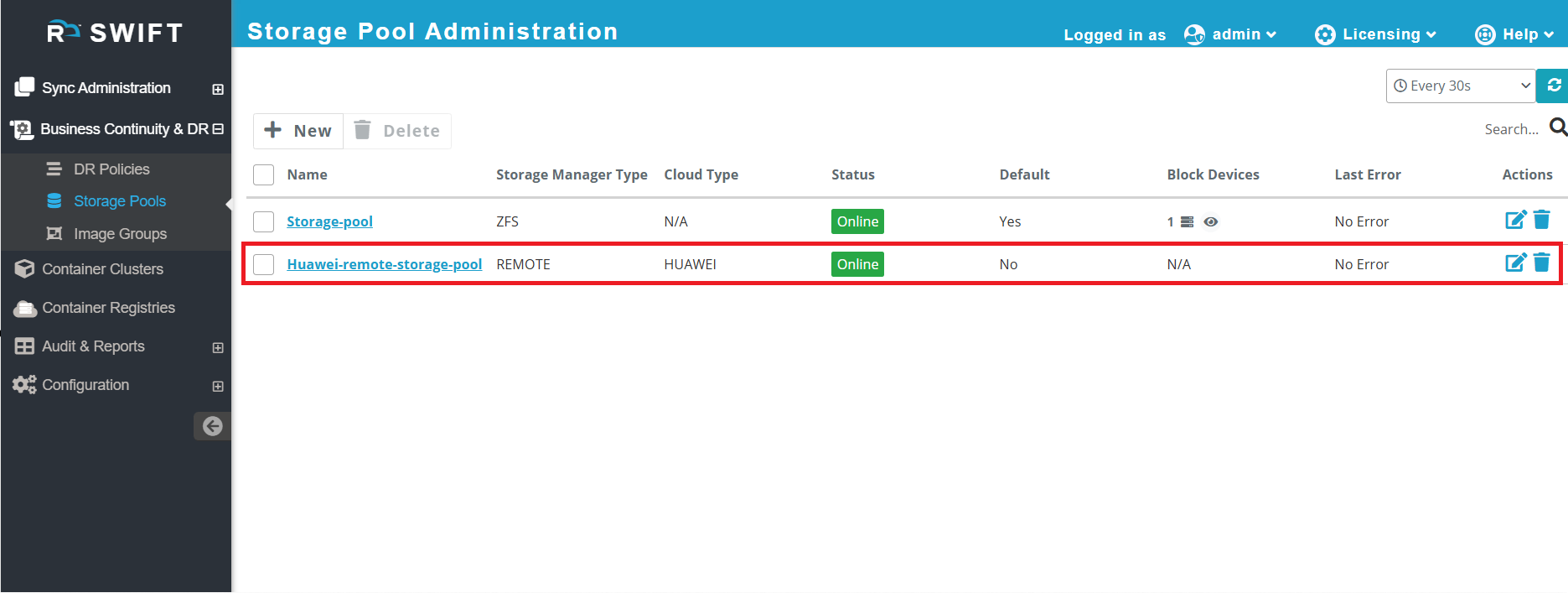
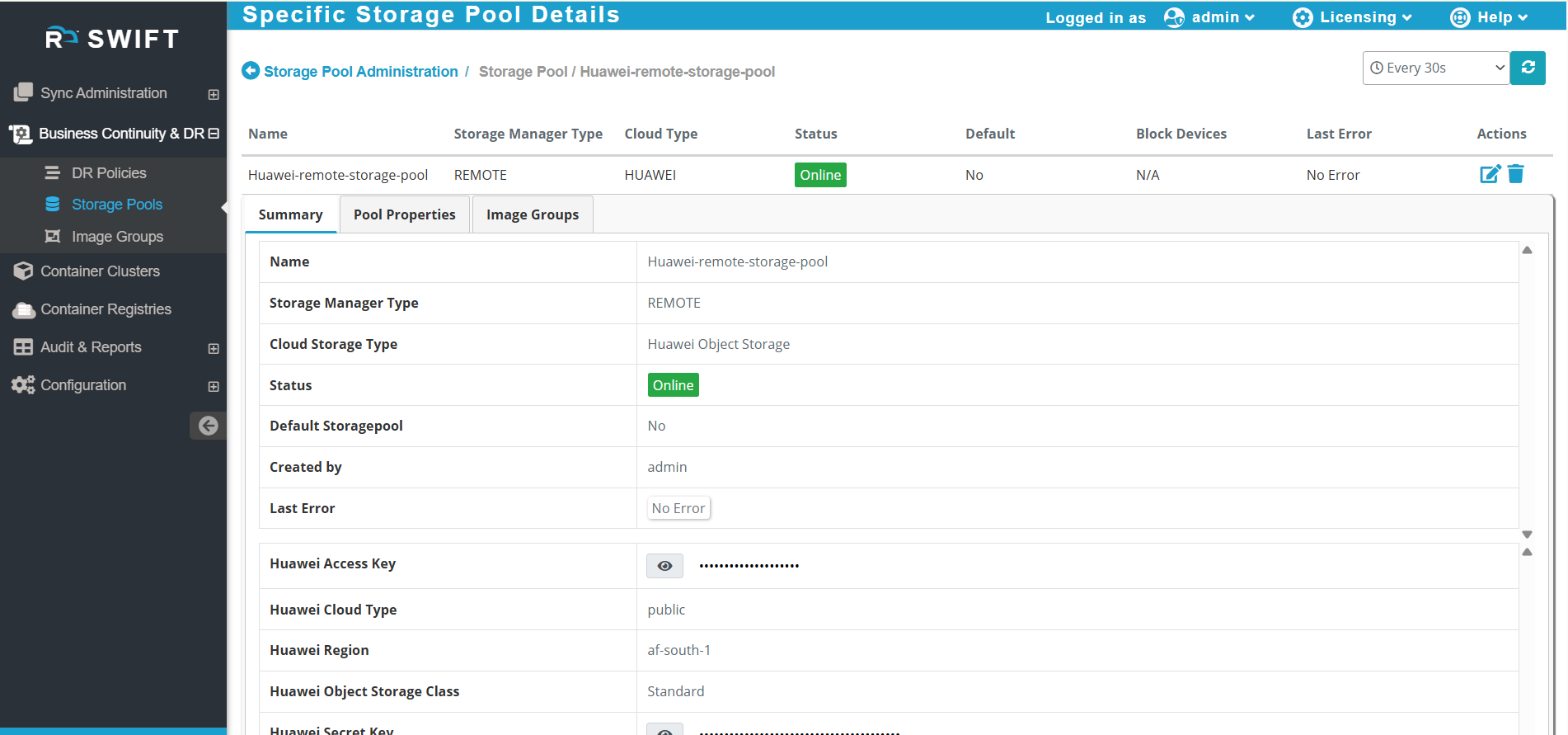
4. When you click on remote storage pool, you will get summary what you have configured while crating it.
Steps to create Remote Backup
Pre-requisite:
1. A remote storage pool must be created in Huawei cloud. How to create Huawei remote
2. The stage1 sync must be completed which will create image group.
1. Select the image group where you want to backup and click on camera button under actions tab to create a backup.
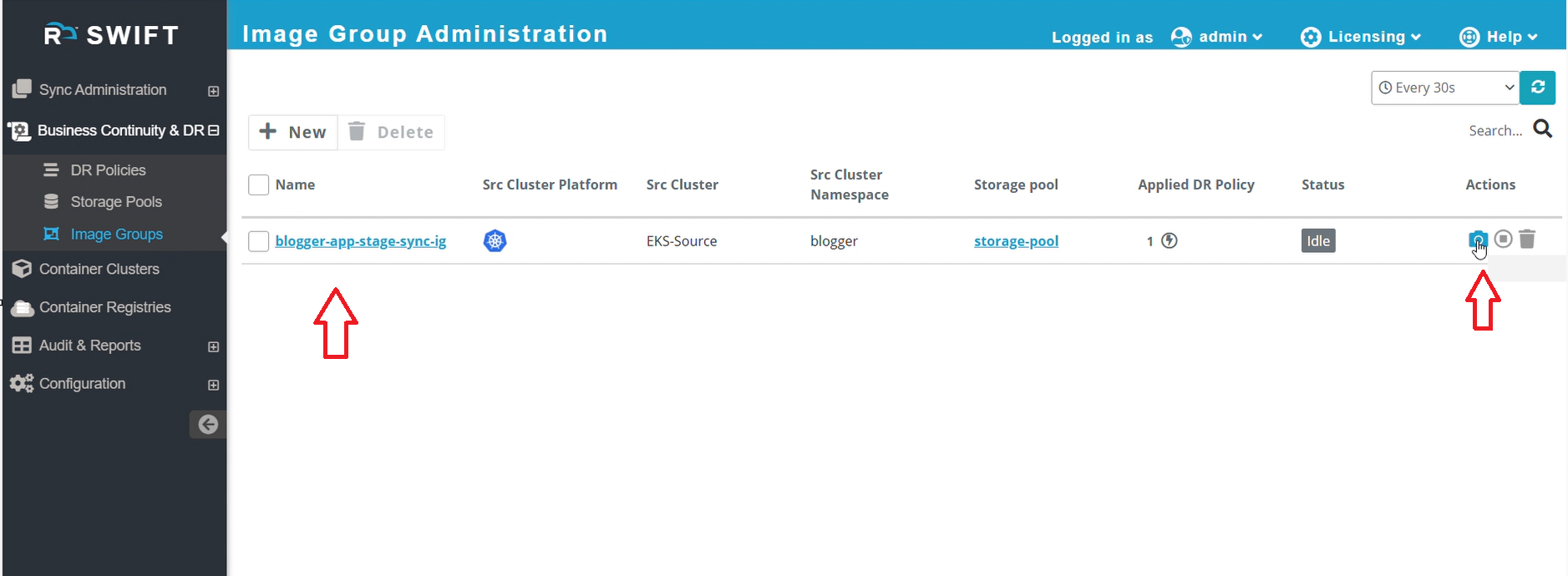
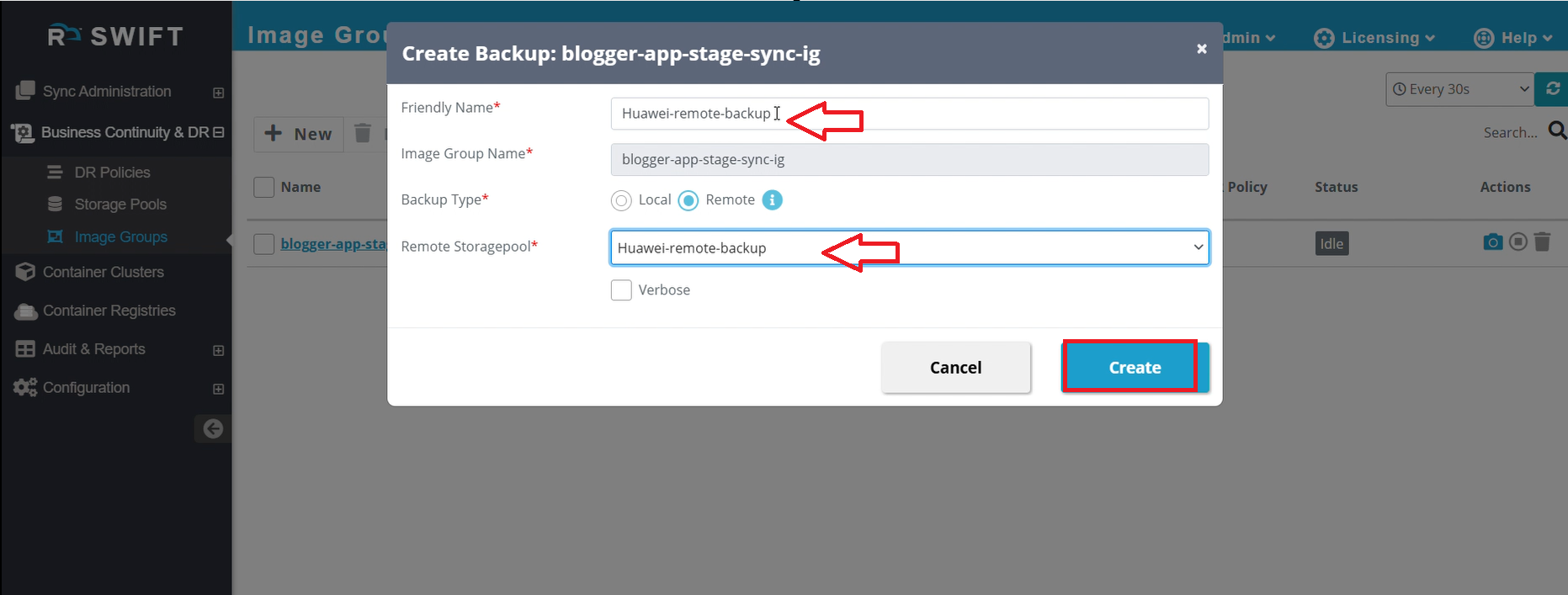
2. Provide a friendly name, select Remote as the Backup Type, choose the remote storage pool from the dropdown, and click Create.
3. The remote backup will start and based on storage size , it will take some time to complete. Next time only incremental
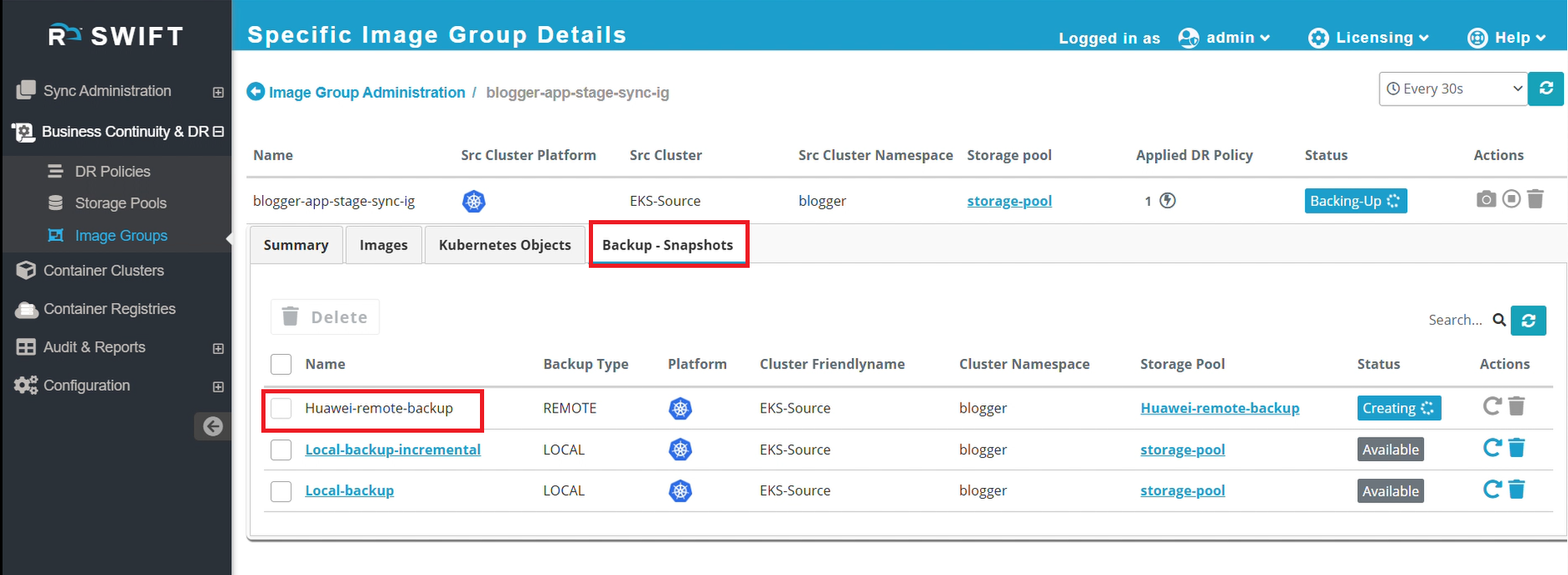
4. The Remote backup also completed.
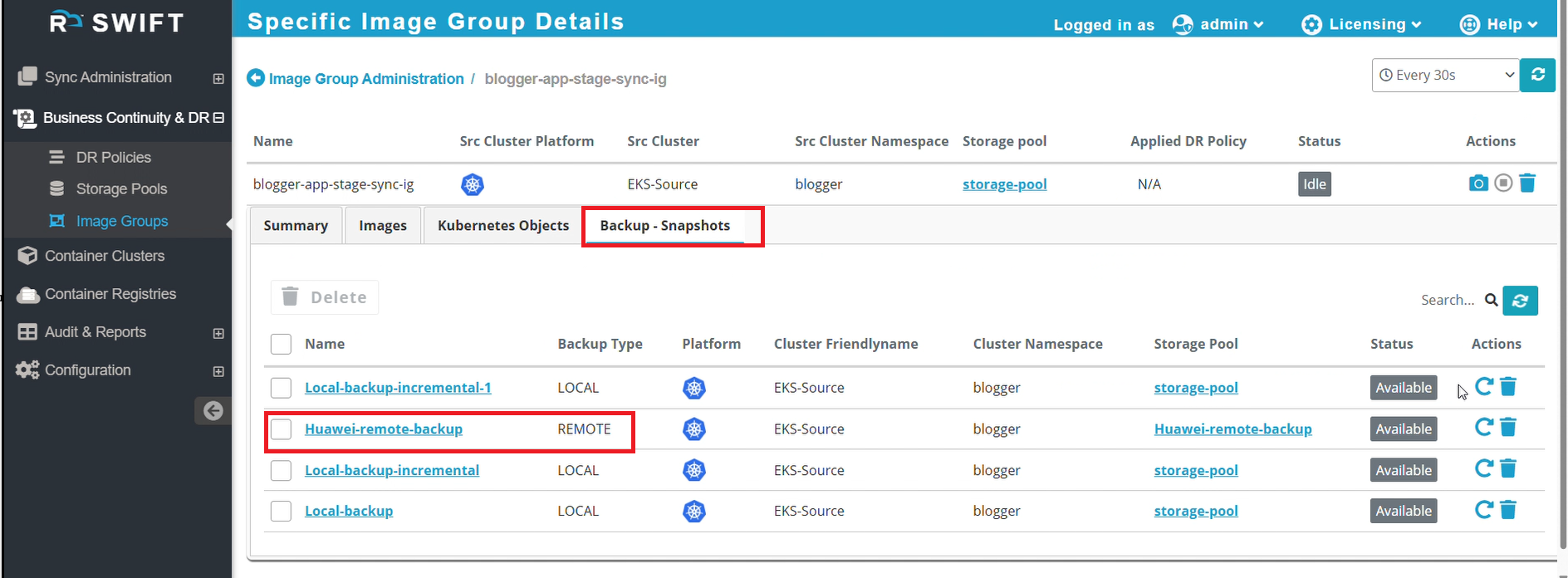
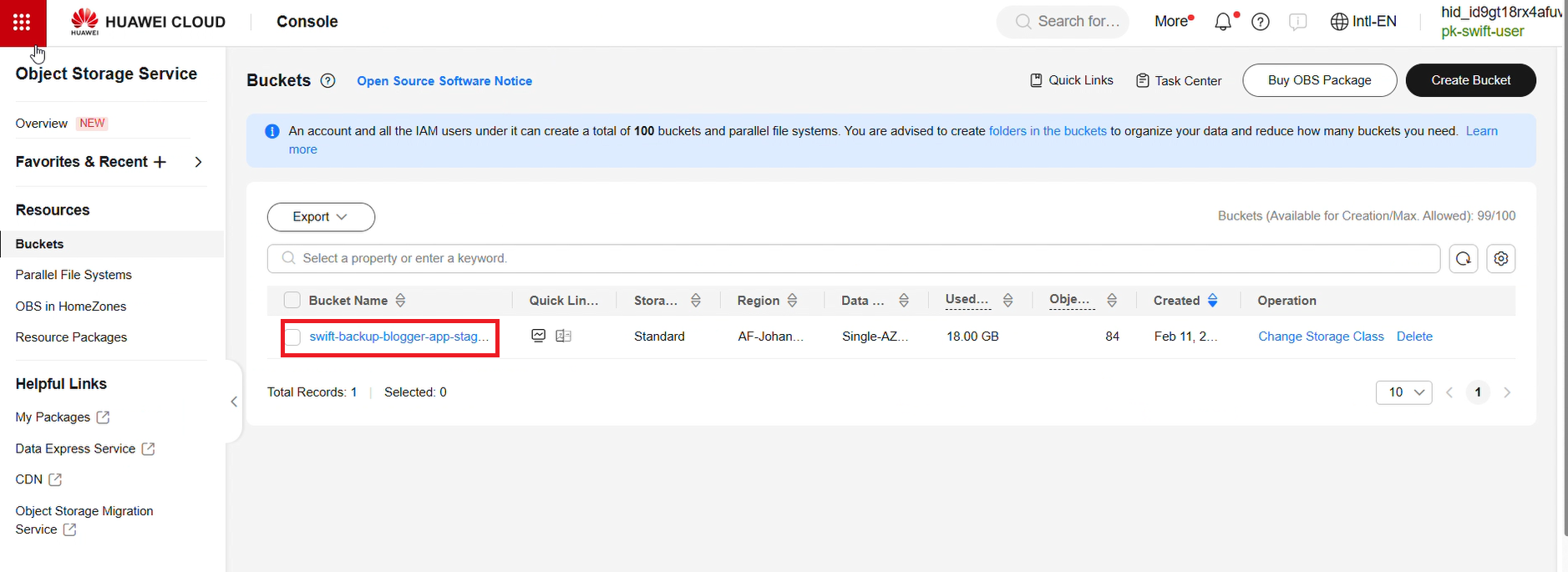
5. You can also verify by login into Huawei cloud and see the in the object storage services. The remote backup successfully completed.